Foot Massager vs Foot Spa: Which One Do You Need?
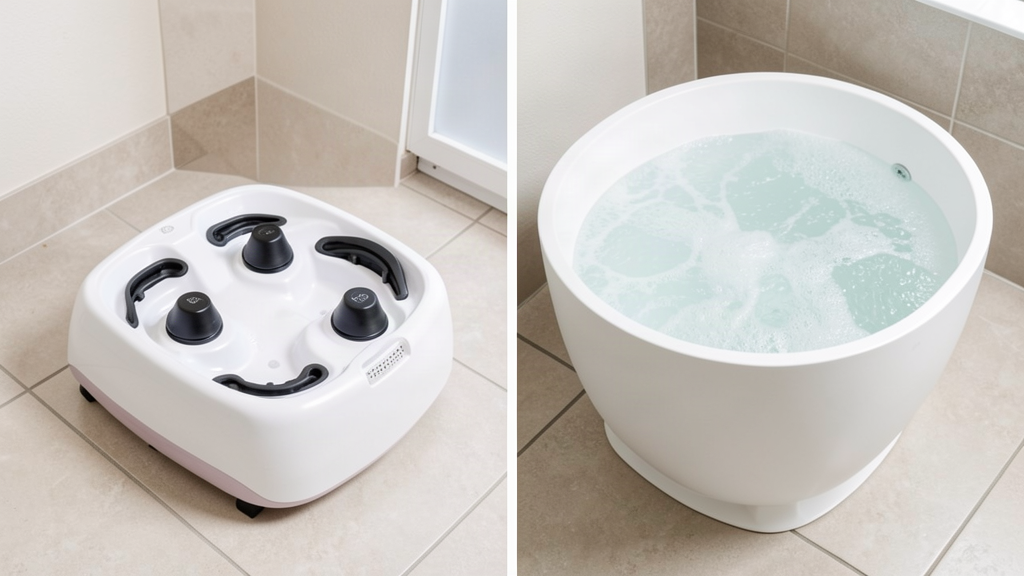
Sore, tired feet are the universal tax of modern life — and when it's time to do something about it, most people freeze at the same question: foot massager vs foot spa — which one do you actually need? One kneads and squeezes like a pair of strong thumbs; the other soaks your feet in warm, bubbling water like a salon treatment. They look like they solve the same problem, but they're built for completely different jobs.
Here's the short version before we go deep: buy a foot massager if your goal is pain relief — plantar fasciitis aches, stiff arches, burning soles, or deeply tired muscles. Buy a foot spa if your goal is relaxation and self-care — cold feet, dry skin, an at-home pedicure ritual, or just unwinding after a long shift.
This guide breaks down both options across nine decision factors, with honest talk about where each one wins, where each one disappoints, and which one deserves your money first. By the end, you'll know exactly which camp you fall into — and the smart way to own both without breaking the bank.
(As an Amazon Associate we earn from qualifying purchases. We may also earn commissions from brands listed.)
Quick Answer: The 60-Second Verdict
| Question | Winner | Why |
|---|---|---|
| Chronic pain, plantar fasciitis, sore arches? | Foot massager | Mechanical kneading targets muscle and fascia directly |
| Relaxation, warm feet, self-care ritual? | Foot spa | Warm water soak is proven relaxation — no machine can match it |
| Diabetic or neuropathy concerns? | Foot massager (with caution) | No water/temperature-risk issues if guidelines are followed; see a doctor first |
| Hate cleaning gadgets? | Foot massager | Wipe it down in 30 seconds; spas need emptying, rinsing, drying |
| Want heat? | Both — but differently | Massagers have heated nodes; spas surround feet in warm water |
| Lowest cost of entry? | Foot spa | Basic bubbler spas start around $25–35 |
| Least physical effort | Foot massager | Just put your feet in and press a button |
The real answer most people are looking for: if pain brought you here, the foot massager is the tool. If relaxation brought you here, the spa is the experience. If both apply, start with whichever problem ruins your day most often.
What a Foot Massager Actually Does
A foot massager is a motorized machine that replicates massage techniques — shiatsu-style kneading, rolling, air compression, vibration, heat, or electrical stimulation (EMS). Your feet stay dry. You sit back, insert your feet, and the machine works the muscles and soft tissue of the sole, arch, and heel.
The best foot massagers on the market today feel like a pair of relentless, tireless thumbs digging into your arches. Some — like Miko's popular machines — add heat and air compression around the whole foot. Others focus purely on deep-kneading rollers for conditions like plantar fasciitis.
Who a foot massager is for:
- People with sore, stiff, or burning feet at the end of the day
- Plantar fasciitis sufferers (with their doctor's OK)
- Anyone on their feet all day — nurses, teachers, retail and warehouse workers
- Runners and walkers with tight arches and calf-foot tension
- People who want push-button relief without setup or cleanup
What a Foot Spa Actually Does
A foot spa is a basin — usually with warm water, bubbles, and vibration — designed for soaking, relaxing, and softening the feet. More advanced models add heat-maintenance systems, massage rollers, pumice attachments, and even Shiatsu-style nodes inside the tub.
The warm soak is the core experience. Heat dilates blood vessels in the feet, which many users describe as whole-body relaxation — the same reason a hot bath after a hard week feels medicinal. Add Epsom salts or essential oils and it becomes a full at-home pedicure station.
Who a foot spa is for:
- People whose feet are cold, dry, or rough — the soak softens skin and nails
- Anyone who loves baths, saunas, and slow self-care rituals
- People preparing for an at-home pedicure
- Those with tired-but-not-painful feet who mostly want to unwind
- Guests and households — it's an easy "treat" to share
Foot Massager vs Foot Spa: The Full Comparison Table
Here's how the two categories stack up, feature by feature, across the models most people actually compare:
| Feature | Foot Massager (e.g., Miko, Nekteck) | Foot Spa (e.g., Conair, HoMedics) |
|---|---|---|
| Core function | Mechanical kneading, rolling, compression | Warm water soak with bubbles and vibration |
| Best for | Pain relief, muscle tension, fascia work | Relaxation, warmth, skin softening |
| Heat | Heated nodes/rollers (gentle, dry warmth) | Full water immersion (stronger, whole-foot warmth) |
| Pain relief | ★★★★★ Direct mechanical work on the arch and heel | ★★☆☆☆ Indirect — warmth helps, water does no work |
| Relaxation | ★★★★☆ Very good, especially with compression | ★★★★★ Unmatched ritual experience |
| Skin care | ★☆☆☆☆ Does nothing for skin | ★★★★★ Softens skin, preps nails, aids exfoliation |
| Cleanup | Wipe with a damp cloth — 30 seconds | Drain, rinse, dry — 5–10 minutes each use |
| Setup time | Near zero — plug in, sit down | Fill with warm water (2–3 minutes) |
| Noise | Moderate hum, some mechanical sound | Gentle bubbling (some find it soothing) |
| Typical price | $50–$300 depending on features | $25–$80 for most household models |
| Portability | Heavier units stay put; compact ones travel | Bulky basin — stays home |
| Maintenance | Occasional wipe-down | Regular drying to prevent mildew/odor |
| Power | Electric, some with remote/app control | Electric, typically 100–250W heating elements |
Price Face-Off: What You Get for the Money
Budget tier ($25–50): A basic bubbler foot spa (Conair, HoMedics) delivers genuine warm-water relaxation for the price of a single professional pedicure. At this price, foot massagers are limited to roller balls and manual tools — decent, but not machine-grade relief.
Mid tier ($50–150): This is where foot massagers take over. The Nekteck and similar shiatsu machines around $60–100 deliver real kneading that works on muscle tension. Spas at this price add heat maintenance and better rollers but remain soaks first.
Premium tier ($150–300): Top foot massagers like the Miko Shiatsu with heat and compression, or clinical-grade machines like the MedMassager, deliver features spas can't touch — intensity settings, programmed routines, EMS modes. Foot spas top out lower; beyond ~$80 you're paying for build quality and jets, not new capabilities.
Watch out for: the foot spa accessories trap. Salts, oils, and attachments are cheap individually but add up. Set a self-care budget before the checkout page tempts you.
The Relaxation Gap: Why Soaks Still Win Hearts
If machine logic were the whole story, foot massagers would have killed the foot spa category. They haven't — because relaxation isn't only mechanical. A warm soak works on the nervous system as much as the feet: warmth, stillness, and ritual combine into something a motor can't replicate.
Foot spas also have a social, shared-use edge: partners, kids, and guests will happily soak alongside you. Most people are (rightly) more hesitant to share a foot massager — it's a personal device.
Pro tip: If your main "pain" is just wanting to slow down for 30 minutes, the cheaper spa will serve you better than an expensive massager collecting dust in a closet.
The Pain Gap: Why Massagers Win Doctors' Attention
For actual musculoskeletal pain — plantar fasciitis, arch strain, heel pain, tired-muscle burn — warm water is a comfort, not a treatment. The tissue work that brings relief needs mechanical input: pressing, stretching, and kneading the plantar fascia and small foot muscles.
That's exactly what a good foot massager does. Physical therapists routinely recommend simple tools along these lines (golf balls, frozen water bottles, massage balls) for arch pain, and a quality shiatsu machine automates the same movements. Many plantar fasciitis sufferers report their morning pain routine got dramatically easier with a heated kneading machine on the nightstand.
If you're diabetic or dealing with neuropathy, take one extra step first: talk to your doctor about heat and pressure settings, and consider models designed for sensitive feet. This article is general information, not medical advice — your clinician knows your circulation status, and that changes the answer.
Who Should Choose the Foot Massager
Choose a foot massager first if you say yes to any of these:
- "My feet hurt — arches, heels, or soles, most days"
- "I stand or walk 8+ hours a day"
- "I have plantar fasciitis or chronic arch pain" (with medical guidance)
- "I want relief without prep or cleanup"
- "I'd use it daily, several times a week, forever"
The best massagers are used like toothbrushes: small daily sessions, big cumulative effect. A $150 machine used 300 times a year costs $0.50 per session.
Who Should Choose the Foot Spa
Choose a foot spa first if you say yes to any of these:
- "My feet are tired and cold, not really in pain"
- "I love baths, warmth, and winding down"
- "I want an at-home pedicure setup"
- "Multiple people will use it"
- "I don't mind the filling and cleaning"
A good spa turns an ordinary evening into something to look forward to. For stress-driven foot fatigue, that may be all the "treatment" you need.
Why Not Both? The Smart Budget Play
The best answer for many households is both — bought in the right order. Use the massager for daily pain maintenance (10–15 minutes after work), and keep the spa for weekly unwind sessions, skin care, and pedicure prep.
The budget play: buy a $30–40 basic spa and a $100–150 mid-range shiatsu massager. Combined cost ≈ $150, less than half the price of a premium massage chair attachment — and you've covered both the pain and the relaxation use cases completely.
Some hybrid "foot spa massagers" try to combine both — a soak basin with motorized rollers inside. They work, but they inherit the cleanup burden of a spa plus the mechanical complexity of a massager. Read our full foot spa massager guide before considering one.
How to Decide in 5 Questions
- Is your main complaint pain or tiredness? Pain → massager. Tired/cold → spa.
- Do you have a medical foot condition? Ask your doctor first; if cleared, a massager with adjustable intensity is usually the pick.
- Will you actually clean a water basin weekly? Be honest. No → massager.
- Is this a shared household treat or a personal therapy device? Shared → spa. Personal → massager.
- What's your budget? Under $40, spas dominate. $60+, massagers dominate.
FAQ
Is a foot massager better than a foot spa?
For pain relief, yes — a foot massager's mechanical kneading works muscles and fascia the way warm water can't. For relaxation and skin care, the spa wins. Most people with genuine foot pain get more value from a massager.
Can a foot spa relieve plantar fasciitis pain?
A warm soak can temporarily soothe and relax the area, but it doesn't perform the tissue work most physical therapists recommend for plantar fasciitis. A kneading machine or a simple massage ball routine usually does more. See our foot massage for plantar fasciitis guide.
Are foot massagers safe for diabetics?
Many are, with precautions — but diabetes and foot care is a conversation to have with your doctor first, especially regarding heat and pressure. Some brands market gentler modes specifically for sensitive feet. See our dedicated foot massagers for diabetics guide.
Why are foot spas cheaper than foot massagers?
A foot spa is essentially a heater, a pump, and a tub. A foot massager packs motors, gears, kneading nodes, and control boards. Complexity drives the price gap — and also explains why cheap spas hold up better than cheap massagers.
Can I use a foot massager and a foot spa together?
Absolutely — soak first to relax and soften, then massage while the tissue is warm. Many massage enthusiasts swear by heat-then-knead sequencing. Just dry your feet before touching the electrical massager.
Which costs more to run, a massager or a spa?
Foot spas typically cost more per session — heating water is power-hungry (often 100–800W for heating). A massager uses a modest motor draw for 15 minutes, usually pennies per session on a typical US electricity rate.
Comments