Best Sole Inserts for Plantar Fasciitis
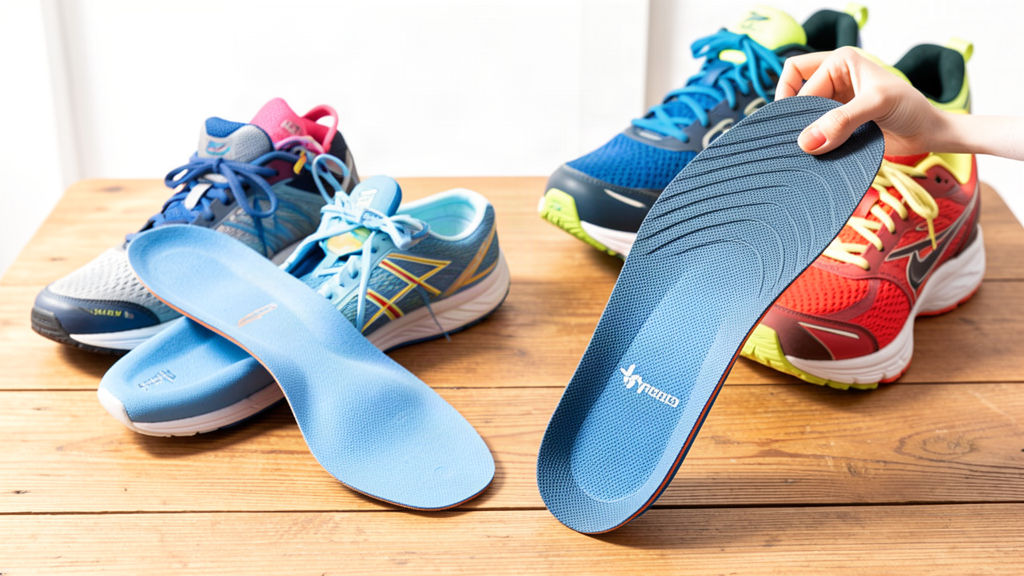
When plantar fasciitis pain arrives, the shopping question that follows is always the same: which sole inserts actually help? The aisle (physical or virtual) is a wall of promises — gel, memory foam, "orthotic," $8 pharmacy pads and $60 premium insoles, all claiming arch support and heel pain relief. The truth underneath the packaging is simpler: an insert helps when it does two things — support the arch in the right place at the right firmness, and cushion the heel strike. Almost everything else is marketing.
This guide compares the best sole inserts for plantar fasciitis by design type, with honest picks per foot shape and budget — based on specifications, materials, and thousands of verified owner reviews, not brand claims. (For the full field including custom options, see the plantar fasciitis insoles pillar.)
(As an Amazon Associate we earn from qualifying purchases. We may also earn commissions from brands listed.)
Quick Picks
| Award | Pick profile | Why |
|---|---|---|
| 🏆 Best Overall | Firm full-length orthotic (Powerstep-style) | Real arch support + deep heel cup + moderate cushioning |
| 💰 Best Budget | Drugstore 3/4-length orthotic (Dr. Scholls-style) | Genuine support at $10–15; 3/4 design fits most shoes |
| 🏃 Best for Athletes | Semi-rigid sport orthotic | Shock absorption + support for running loads |
| 👞 Best for Dress Shoes | Low-profile 3/4 insert | Fits tight shoes where full-lengths can't |
| 🛏️ Best for Standing Work | Full-length with maximum cushion | Fatigue reduction for 8-hour shifts |
How Inserts Help: The 30-Second Mechanism
The plantar fascia takes the arch's stretch load every step — irritated fascia means every step re-strains it. A proper insert (1) holds the arch so the fascia stretches less per step, and (2) cushions heel strike so the shock doesn't transmit straight to the attachment point. That's the whole job. An insert that's too soft does neither (the arch collapses into it); an insert that's too hard for your foot just moves the pain.
The firmness rule: for plantar fasciitis, err firm. Squishy gel feels lovely in the store and does nothing by week two. Support you can feel pressing the arch with your thumb is the right starting point.
Full-Length vs 3/4-Length: The First Decision
| Factor | Full-length | 3/4-length |
|---|---|---|
| Support placement | Arch + heel + forefoot cushion | Arch + heel only |
| Shoe fit | Needs removable insole; takes room | Fits almost anything, even dress shoes |
| Best for | Sneakers, boots, standing work | Dress shoes, flats, tight-fitting shoes |
| Feel underfoot | Complete platform | Floating forefoot |
| Common mistake | Too big for the shoe = toes jam the front | Placed too far forward = arch support misses the arch |
Pro tip: whichever you choose, pull the shoe's existing insole out first (full-length) or place the 3/4 insert flat at the back of the shoe — the heel cup must sit against the shoe's heel, not float mid-foot. Placement errors cause half of all "these didn't help me" reviews.
The Picks, Compared
1. Firm Full-Length Orthotics — Best Overall (Powerstep Pinnacle-class)
The category leader for a reason: a semi-rigid arch shell with genuine support, a deep heel cradle, and a moderate cushioning layer — the complete load-management package in one insert. This is the profile most podiatrists reach for first when recommending OTC inserts for plantar fasciitis-style pain.
Owner pattern: the most common review theme is "two weeks of adjustment, then morning pain eased." The second most common: "wrong size at first — follow the sizing chart, not your usual guess."
2. Budget 3/4 Orthotics — Best Value (Dr. Scholls/Drugstore-class)
The honest budget answer: real (if slightly softer) arch support and heel cup for $10–15, in a 3/4 shape that fits every shoe you own. Durability is the trade — expect 3–6 months of support before the shell compresses (premium inserts last a year+).
Owner pattern: works surprisingly well for mild-to-moderate arch strain; the "didn't help" reviews cluster in severe cases that needed firmer shells or medical care.
3. Semi-Rigid Sport Orthotics — Best for Runners (Superfeet-class)
The runner's choice: higher-density foam, structured heel cup, and arch support built for impact — plantar fasciitis runners typically pair these with the stretching routine rather than maximal cushion. See our best shoes for plantar fasciitis guide for the full running-shoe pairing.
4. Low-Profile Dress Inserts — Best for Tight Shoes
For dress shoes, flats, and loafers where full-lengths won't fit: thin 3/4-length inserts with firm-but-thin arch shells. You sacrifice cushioning (there's no room for it) and keep the support — the correct trade in tight shoes.
5. Max-Cushion Standing-Work Inserts — Best for 8-Hour Shifts
For nurses, retail, warehouse: full-length inserts with maximum cushioning layers plus firm arch shells — fatigue fighters more than therapy tools. Best paired with rotating two pairs (wear one, air one).
Comparison Table
| Pick | Length | Firmness | Arch type | Price tier | Lifespan | Best for |
|---|---|---|---|---|---|---|
| Powerstep-class orthotic | Full | Semi-rigid | Medium-high arch | $40–55 | 1+ year | Most people, daily wear |
| Drugstore 3/4 | 3/4 | Medium-firm | Medium arch | $10–15 | 3–6 mo | Budgets, dress shoes, mild strain |
| Superfeet-class sport | Full | Firm | High-profile | $45–55 | 1+ year | Running, athletic loads |
| Dress low-profile | 3/4 | Firm-thin | Low-medium | $15–25 | 6–12 mo | Tight shoes |
| Max-cushion work | Full | Medium | Medium | $25–40 | 6–12 mo | Standing shifts |
Sizing and Fit: Where Inserts Go Wrong
- Measure, don't guess. Sizing charts differ per brand; trim-to-fit lines exist for a reason.
- The arch must sit AT the arch — the insert's peak under your medial arch bone, not behind or ahead of it.
- Pull the old insole before fitting a full-length (stacking raises your foot and jams the toe box).
- Heel cup snug against the shoe's heel. Floating heel cups click and shift.
- Break in gradually — a couple hours daily the first week; support your feet haven't felt before takes adaptation.
- Wear them in everything. Plantar fasciitis doesn't take shoe holidays; bathroom-slippers mornings are the classic re-flare.
Watch out for: the one-pair-solves-everything fantasy. Most sufferers need 2–3 pairs (work shoes, gym shoes, casual) so the support never lapses — rotating a single pair between shoes fails because the pair stays in yesterday's shoes.
When OTC Inserts Aren't Enough
Custom orthotics ($200–800) earn their price when foot structure is unusual (very high arch, significant flatfoot, unusual mechanics) or when a genuine attempt at firm OTC inserts plus stretching and better shoes fails over 4–6 weeks. That decision belongs with a podiatrist — the same visit that confirms the diagnosis. Persistent worsening pain, numbness, or one-sided swelling are doctor-visit signs regardless of insert plans. This article is general information, not medical advice.
The Materials Science, Briefly
What an insert is made of decides how long its support lasts — the category's quietest spec:
- EVA foam (the standard): firm-but-lightweight; compression-set over 6–18 months depending on body weight and wear hours. The support "dies" before the insert looks worn — the replacement cue is symptoms returning, not visible wear
- Polyurethane: denser, more durable (2–4 years), slightly heavier — the premium material in the best orthotics
- Gel layers: comfort accent, not structure — fine as a top layer over a firm shell, useless as the shell itself
- Carbon-fiber/composite shells: the stiffest support per millimeter — the thin-dress-insert and sport-orthotic territory
- Cork: molds slightly with heat and wear — the traditionalist's material, medium durability
The buying translation: check what the shell is made of, not just the top cloth — the shell is the product.
The Semirigid Spectrum: Soft to Firm
Insert firmness isn't one dial — it's a spectrum with named zones:
- Cushioned accommodative (softest): for sensitive feet, arthritic joints, diabetic-foot protection (with the medical guidance that population requires) — pure pressure distribution, minimal correction
- Flexible support: gentle arch assist for mild strain — the mass-market tier's calibration
- Semirigid (the plantar sweet spot): the shell holds the arch under full body weight — where most plantar fasciitis buyers land (the mechanism)
- Rigid: maximal control — the motion-control end for pronounced overpronation; feels aggressive to unadapted feet
The honest rule: start semirigid; move firm only if the mechanism proves insufficient; never start rigid on an irritated fascia without professional guidance.
The Six-Insert Household (The Real-World Economics)
Plantar sufferers discover the economics quickly: one pair of inserts serves one pair of shoes, and feet wear three to five pairs weekly. The math that works: two quality pairs rotating among the three most-worn shoes (moving takes 20 seconds) or three budget-tier pairs installed permanently. The closet math that doesn't: one premium pair living in yesterday's shoes while today's shoes run bare — the support lapse the fascia notices.
The Work-Shoe Insert Strategy
The eight-hour shoes deserve the best insert in the rotation — the pair that spends most hours doing the load work. For standing professions, this single placement decision matters more than any insert upgrade; the work shoe is where plantar strain accumulates.
The Break-In Science
Inserts change foot mechanics — feet need the transition: days 1–3, one hour daily (the arch's introduction); days 4–7, half-days, mild arch soreness acceptable, sharp pain not; week 2+, full wear as tolerated. The classic mistake: full-day wear on day one, a sore arch by night, the inserts blamed and shelved — the adaptation period is the mechanism working, not failing.
When the Insert Isn't Enough
The insert's honest limits: it supports the foot, not the whole chain — tight calves, weak hip stabilizers, sudden training spikes, and worn shoes all outvote an insert (the full toolkit pairs the layers). The four-to-six-week honest trial (insert + stretching + sensible shoes) that fails is the doctor's referral point — custom orthotics, targeted therapy, or further evaluation take over from there.
FAQ
What are the best sole inserts for plantar fasciitis?
For most feet, a firm full-length semi-rigid orthotic with a deep heel cup (Powerstep Pinnacle-class, $40–55) — it combines real arch support with moderate cushioning. On a budget, drugstore 3/4-length orthotics at $10–15 deliver genuine support for mild-to-moderate strain.
Are gel insoles good for plantar fasciitis?
Not really. Gel feels pleasant but compresses under body weight — the arch collapses into it, so the support mechanism (holding the arch) never happens. Cushioning alone isn't the answer; structure is. Firm shells with cushioning layers work; gel alone doesn't.
How long do plantar fasciitis insoles take to work?
Expect an adaptation period of 1–2 weeks (some arch soreness is normal at first), with meaningful pain relief typically reported from weeks 2–4 of consistent wear. Inserts pair with stretching — neither replaces the other.
Can I put orthotic insoles in any shoes?
Almost any shoe with a removable insole takes full-length orthotics; tight dress shoes and flats take 3/4-length low-profile inserts instead. Flip-flops and backless slippers can't hold an insert — plantar fasciitis sufferers should treat structured, supported shoes (or plantar-support sandals) as the default.
3/4-length or full-length insoles — which is better for plantar fasciitis?
Full-length for sneakers, boots, and standing work (more complete support and cushioning platform); 3/4-length for dress shoes and tight fits. Therapeutically they're near-equal for arch support — the choice is shoe-driven, not therapy-driven.
When should I see a doctor instead of buying inserts?
If pain is severe, worsening, lasted more than a few weeks despite proper inserts and stretching, or comes with numbness, tingling, or one-sided swelling — see a podiatrist. Custom orthotics and other treatments are more effective when started correctly rather than after months of self-experimentation.
Comments