EMS Foot Massagers: Do They Really Work?
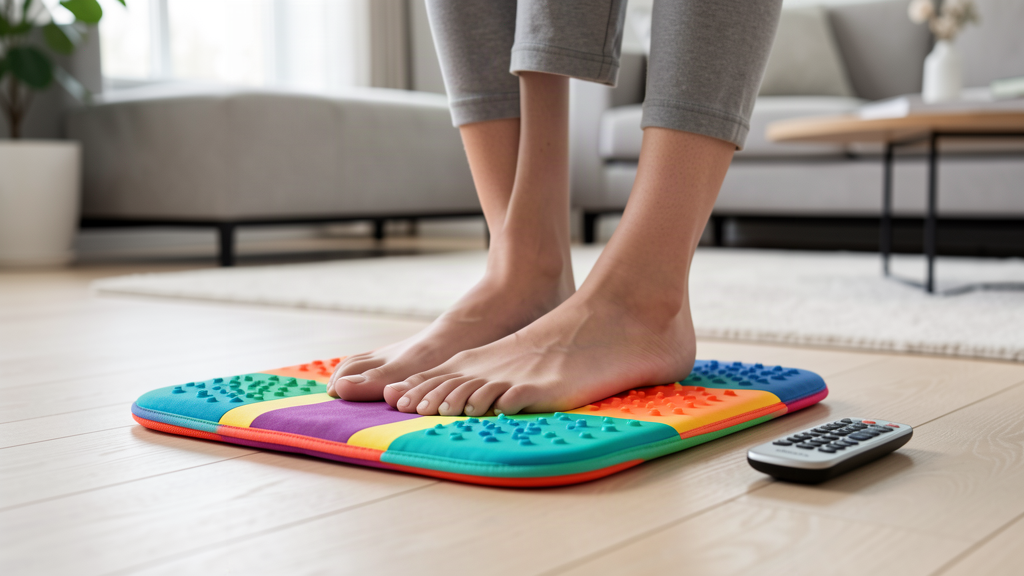
They're all over social feeds — flat, colorful pads that promise to "massage" your feet with invisible electrical pulses while you sit and scroll. EMS foot massagers are one of the most-bought, most-returned, and most-misunderstood gadgets in the foot-care world. The marketing promises circulation boosts and nerve relief; the skeptics call the whole category a scam. As usual, the truth lives in the middle — and it's worth 1,500 words of honesty before you spend $40–80.
Here's the short version: EMS does something real — the pulses genuinely stimulate muscles — but "something real" is much smaller than the ads imply. It's a mild comfort tool with interesting physiology behind it, not a therapy device. Below: how it actually works, what the evidence says, what owners report, and who should never touch one.
(As an Amazon Associate we earn from qualifying purchases. We may also earn commissions from brands listed.)
What EMS Actually Is (The 60-Second Science)
EMS stands for electrical muscle stimulation. The pads contain electrodes that deliver small electrical pulses through the skin. Those pulses reach nerves, and nerves respond the way they respond to any signal: they fire. When a motor nerve fires, the muscle it controls contracts — not a metaphor, an actual visible twitch in your foot arch when the pad cycles.
So the machine isn't "massaging" anything in the mechanical sense — there are no nodes, no rollers, no pressure. It's remotely puppeteering your muscles via their nerves. Physiotherapy clinics have used the same principle for decades (muscle re-education, post-surgery activation) with medical-grade machines. Consumer foot pads use the same physics at gentler, less-precise settings.
That's the honest core of "does it work": yes, the stimulation is real. The question is what that stimulation achieves — and that's where the marketing runs ahead of the science.
The Real Claims vs What Evidence Supports
| Marketing claim | What's actually supported |
|---|---|
| "Boosts blood circulation" | Partially plausible — muscle contractions do pump blood, that's how veins work. Small, temporary effect |
| "Relieves plantar fasciitis pain" | Weak — no quality home-use studies; comfort reports only |
| "Treats neuropathy" | Not supported — neuropathy is a medical condition needing a doctor, not a pad |
| "Recovery like athletes' EMS boots" | Misleading — clinical EMS is targeted, stronger, supervised; a flat pad isn't that |
| "Tones/strengthens foot muscles" | Marginal — contractions happen, but meaningful strength gains need real loading |
| "Detox / reflexology map benefits" | No. Not how physiology works |
The pattern: every real EMS effect is small, temporary, and comfort-oriented. Every dramatic claim borrows from clinical settings the pad doesn't replicate. For context on how EMS compares to mechanical types, see our foot massager types explainer.
What the Technology Genuinely Offers
Strip away the hype and three honest uses remain:
- A novel relaxation input. Many owners genuinely enjoy the tingling — it's a new sensation for tired feet, and pleasant novelty has real relaxation value after a long day.
- Passive muscle activation. If you sit for 10 hours, the periodic contractions remind foot muscles they exist — a mild counter to total sedentation, better than nothing.
- Warm-up adjacent. Some users run a session before stretching; light activation before mobility work is a legitimate athletic habit, scaled down here.
That's the honest list. Note what it doesn't include: pain treatment, circulation therapy, nerve healing.
What Real Owners Report
Patterns across thousands of verified reviews of the popular pads (Nooro and its many lookalikes):
The positive minority (roughly a third, typically):
- "Weird at first, then pleasant" — the tingling genuinely relaxes some feet
- Decent for the price as a novelty comfort device
- Useful for people who can't tolerate mechanical pressure (fragile, bony, or very sore feet)
The recurring complaints:
- "Did nothing" — the most common negative; people who expected massage pressure got only tingling
- Intensity inconsistency — cheap pads deliver jumpy, uneven pulses; quality control is a known weak spot in the category
- Durability — pads dying within months are a repeated theme at the budget end
- The sticky/gel surface wearing out or collecting dust/lint, degrading contact
Verdict from the crowd: satisfaction depends almost entirely on expectations. Buyers who wanted a $40 tingling foot-gadget were often happy; buyers who wanted a massager were disappointed.
EMS vs Mechanical Massagers: The Honest Comparison
| Factor | EMS pad | Mechanical (shiatsu/compression) |
|---|---|---|
| Feels like massage | Tingling, not pressure | Yes — actual kneading/squeezing |
| Plantar-fasciitis-style arch relief | Weak | Strong — direct tissue work |
| Relaxation novelty | High at first | Medium |
| Price | $30–80 | $40–300 |
| Silent use | Nearly | Moderate hum |
| Fraud-resistance (does the thing exist) | Yes, pulses are real | Yes |
| Evidence base for pain relief | Thin | Moderate (massage literature) |
Pro tip: if your complaint is arch pain or swelling, a $15 foot roller or a $10 massage ball outperforms any EMS pad — mechanical pressure is simply the more relevant mechanism.
Who Should NOT Use EMS Foot Pads
This section matters more than the rest of the article:
- Pacemaker or implanted electrical device users — absolute no. The interference risk is real and documented. This is a hard contraindication, not a preference.
- Pregnant women — standard precaution for electrical stimulation devices; talk to your doctor first.
- People with epilepsy — discuss with a physician before use.
- Anyone with numbness or sensory loss in the feet — if you can't feel the intensity, you can't tell when it's too much. A pad you can't feel is a pad that can quietly hurt you.
- Open wounds, infections, or broken skin on the sole — current takes the path of least resistance; don't give it raw skin.
- DVT or suspected clots — the same massage-category rule: no stimulation until cleared by a doctor.
If you fall in any of these groups, the mechanical route (gentle shiatsu machines, heat-only devices) is the safe alternative — see our neuropathy-safe picks and diabetic-safe guide.
How to Use One Properly (If You Still Want To)
- Bare, clean, dry feet — the pad needs skin contact; lotion kills conductivity.
- Start at the lowest intensity and climb slowly — the jump between levels is bigger than it looks.
- Sessions of 15–20 minutes max, per most manufacturers' guidance — more is not better with electrical stimulation.
- Sitting use only — never stand or walk on the pad; the electrode surface isn't a weight-bearing platform.
- Expect tingling, not massage — if you're hoping for pressure, return it now rather than disappointed in March.
- Watch your skin — redness that doesn't fade in an hour means lower intensity or fewer sessions.
For the specific safety issues and side-effect patterns: EMS foot massager side effects.
The Verdict
EMS foot massagers are real devices with exaggerated marketing. The stimulation is genuine physiology; the benefits are modest comfort. If you understand that and want a curious little relaxation gadget, the better-made pads deliver exactly that. If you want actual relief for arch pain, swelling, or end-of-day foot misery, a mechanical massager — even a $15 roller — is the better-spent money.
Treat them as what they are: the foot-care equivalent of a fidget toy with a mild physiological party trick. Fun, occasionally pleasant, occasionally useful — and never a therapy.
FAQ
Do EMS foot massagers actually work?
The stimulation is real — EMS pads genuinely cause muscle contractions via electrical pulses. But "working" depends on expectations: as a mild relaxation/comfort device, yes for many users; as a treatment for pain, circulation problems, or neuropathy, the evidence doesn't support the marketing claims.
What does an EMS foot massager feel like?
A tingling, tapping, buzzing sensation in the soles, with visible muscle twitches at higher intensities. It does not feel like mechanical massage — no pressure, no kneading, just rhythmic electrical tingling that many users describe as strange at first and pleasant once accustomed.
Are EMS foot massagers safe?
For most healthy adults, yes at moderate settings — with hard exceptions: pacemaker users, pregnant women (without medical OK), people with epilepsy, anyone with foot numbness or broken skin, and suspected blood clots. If any of those apply, don't use one without asking your doctor first.
Is EMS better than a shiatsu foot massager?
For massage purposes — no. Shiatsu provides actual mechanical tissue work, which is the relevant mechanism for arch pain and muscle tension. EMS offers a novel passive sensation. They're barely the same category despite sharing a shelf.
Can EMS foot massagers help neuropathy?
Home EMS pads are not a neuropathy treatment, and the marketing suggesting so overstates thin evidence. Some patients report comfort during use, but neuropathy is a medical condition that needs proper evaluation — see our neuropathy massager guide for safer comfort options after your doctor's input.
Why did my EMS foot massager do nothing?
Common causes: expectations (tingling isn't massage), low-quality pads with weak/jumpy output, dry or callused soles blocking current, or intensity too timid. If adjusting those doesn't change the experience, the honest answer is that the category may just not be for you — a mechanical massager is the better fit.
Comments