Foot Soaks & Salts: Recipes for Tired Feet
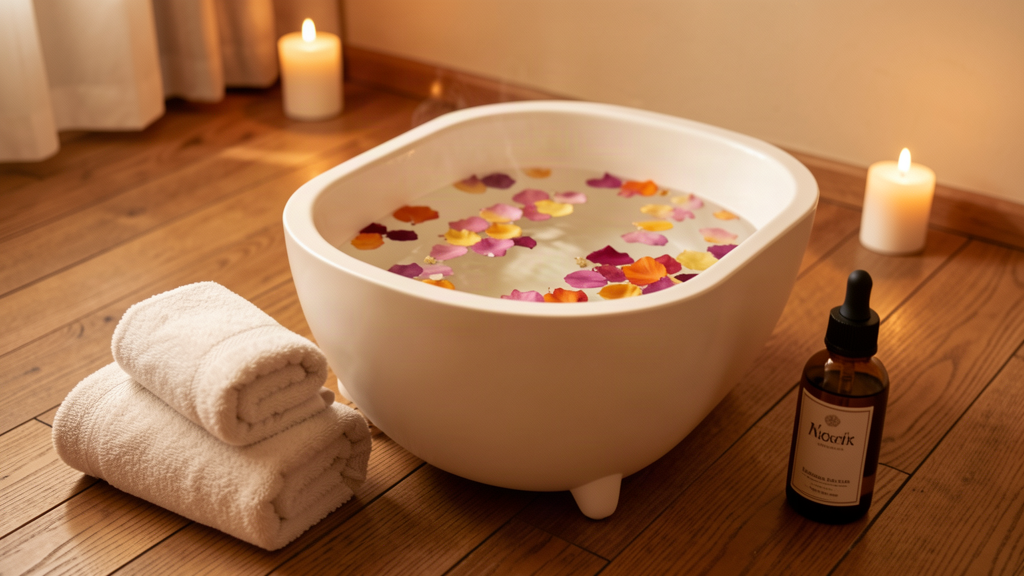
The foot soak is the oldest foot-care ritual still in daily use — warm water, a basin, twenty minutes — and it has survived every technological generation since because it delivers something machines can't: stillness, warmth, and a genuine physiological pause. The modern version adds the pharmacy shelf: Epsom salts, essential oils, baking soda, herbal blends, each with their claims and their honest reality.
This guide covers the actual recipes (exact proportions, temperatures, durations), what each soak type genuinely does versus what's marketing, and the conditions where soaking is the wrong move. Simple, warm, honest.
(As an Amazon Associate we earn from qualifying purchases. We may also earn commissions from brands listed.)
Quick Recipes: The Six Standards
| Soak | Recipe | Duration | Best for |
|---|---|---|---|
| Classic Epsom | ½–1 cup Epsom salt in warm water | 15–20 min | Tired feet, post-stand days |
| Sea salt + baking soda | ¼ cup each, warm water | 15 min | General refresh, mild odor |
| Baking soda solo | ⅓ cup in warm water | 15 min | Odor-focused evenings |
| Warm herbal (tea-based) | 2 chamomile or peppermint tea bags brewed strong | 15–20 min | Wind-down ritual, sensory pleasure |
| Vinegar dilution | ½ cup white/apple cider vinegar in 2 gal warm water | 10–15 min | Odor and skin-refresh claims (modest) |
| Plain warm water | The underrated classic | 15 min | Everything above's base mechanism |
Temperature rule: warm, not hot — roughly body temperature to slightly above (98–104°F / 37–40°C). Test with a wrist, not a calloused foot; feet with reduced sensation should test with an elbow or use a thermometer (the safety notes apply to soaks too).
What Soaking Actually Does (The Honest Physiology)
Setting the record straight — the real mechanisms are simpler than the packaging claims:
- Warmth. The core active ingredient of every soak: warm water dilates blood vessels in the feet, relaxes muscle tension, and calms the nervous system — the same reason a hot bath feels medicinal. This is the bulk of the "ahh."
- Skin softening. Water itself (plus any salt) softens the stratum corneum — which is why soaks precede callus work: 15 minutes of soaking makes pumicing dramatically easier and safer (the routine).
- Stillness and ritual. Twenty minutes of sitting with feet in warm water is a scheduled downshift — the under-rated active ingredient in every "detox" soak's fanbase.
- Mild skin effects. Salts add mild drawing and deodorizing effects; baking soda neutralizes some odor compounds; vinegar acidifies skin surface mildly (fungus's least favorite pH).
What soaking doesn't do: pull "toxins" out through your soles (liver and kidneys own that job — every detox-foot-bath color change is electrode oxidation or dirt, as we documented in the foot spa comparison), or deliver magnesium "absorption" in meaningful amounts (the evidence for transdermal magnesium is thin — the relaxation is real, the mineral story isn't the reason).
The Ingredients, Honestly
Epsom Salt (Magnesium Sulfate)
The classic, and the honest default: dirt-cheap, dissolves well, mildly softening, and the ritual it anchors is genuinely relaxing. The "magnesium deficiency fix" claims overreach — but as a soak base, nothing beats $3/lb Epsom.
Sea Salt / Himalayan Salt
Functionally interchangeable with Epsom for soaking (different mineral profiles, same modest effect) at a higher price. The honest verdict: buy what smells and feels nice; the physiology doesn't care about the color.
Baking Soda
The odor specialist: neutralizes acid compounds, softens water, costs cents. The night-before-shoes-off-days soak for smell-conscious owners. Full odor system: foot powder guide.
Essential Oils (Tea Tree, Peppermint, Lavender)
The sensory layer — real aromatherapy's honest claim is pleasantness, and pleasantness is legitimate in a wind-down ritual. Tea tree oil adds mild antifungal activity at proper dilution (a few drops per basin, never more — it's irritating neat). Peppermint reads as cooling-and-fresh; lavender reads as bedtime.
Vinegar
The folk-remedy veteran with modest real chemistry: mild acidification (unfriendly to the athlete's-foot fungus's environment) and odor neutralization. It's an adjunct, never a treatment — persistent fungus needs real antifungals (the care routine).
The Recipes in Full
The Post-Work Classic (Epsom Base)
Warm water (2–3 gallons) + 1 cup Epsom salt, dissolved fully before feet enter. 15–20 minutes, book optional. Towel dry thoroughly — especially between toes — then moisturize (the evening routine).
The Wind-Down (Herbal Evening)
Brew 2 peppermint or chamomile bags strong (5 min, hot), pour into basin, top with warm water to temperature. Optional: ½ cup Epsom. 20 minutes before bed — the sleep-adjacent version of the ritual, pairing naturally with gentle self-foot massage.
The Odor Reset (Baking Soda Evening)
⅓ cup baking soda in warm water, 15 minutes, then dry fully and powder (the freshness system) — the night-before-shoes-off event.
The Callus-Prep (Before Pumice)
Plain warm water or Epsom soak, 10–15 minutes to soften the stratum corneum, then gentle pumice work on the softened skin, then moisturize. Soak-first is what makes the pumice session safe and effective — dry-filing is the mistake (routine details).
The Cold-Weather Restore
Warm (not hot) soak + 2 drops peppermint oil + a dash of Epsom, 20 minutes, thick socks after — the winter-evening classic that earns its following honestly.
When NOT to Soak (The Important List)
Soaking is gentle, but not universally safe — skip or ask a doctor first when:
- Diabetes with reduced sensation or any foot complications — the temperature-sensing problem plus maceration risk; the doctor's guidance decides (the diabetic-safety guide)
- Open wounds, cuts, athlete's-foot flare with broken skin — soaking open skin in a basin is an infection invitation
- Athlete's foot, active and unbroken-skinned — 20 minutes of warm water is fungus-comfortable; treat the fungus, soak on non-flare days
- Any foot with poor circulation or vascular disease — the temperature questions belong to a doctor
- Post-surgical feet — follow the surgeon's timeline exactly, not the internet's
And the universal rules: never hot water (warm only), never share basin water, clean and dry the basin between uses, and dry feet completely after — damp between-toes is where trouble starts.
Soak vs. Machine: The Honest Division of Labor
| Complaint | Soak | Machine |
|---|---|---|
| Deep arch pain | Comfort layer | The tissue-work answer (guide) |
| Swelling | Mild, indirect | Compression does the actual drainage (guide) |
| Cold feet, stress, sleep wind-down | The category champion | Good second |
| Skin care, callus prep | The only answer | Nothing |
| Odor (with powder system) | Adjunct | Nothing |
The nightly pattern many owners converge on: soak + massage machine + moisturize, in that order — warmth first, tissue work second, skin care third. The ritual stacks.
FAQ
What is the best foot soak for tired feet?
The classic Epsom soak — ½–1 cup Epsom salt in warm (not hot) water for 15–20 minutes. The mechanism is warmth, stillness, and skin-softening; the Epsom ritual is cheap, gentle, and the most-loved version of the experience.
Do Epsom salt foot soaks really work?
For tired, stressed, cold feet — yes, in the honest sense: warmth dilates blood vessels and relaxes tissue, and the 20-minute stillness is a genuine nervous-system downshift. For "magnesium absorption" and detox claims — no, the evidence doesn't support those stories; the relaxation is real without them.
How long should you soak your feet?
15–20 minutes is the sweet spot — long enough for warmth and softening to work, short of the skin-maceration zone (white, waterlogged skin) that longer soaks cause. Callus-prep soaks can run 15 minutes; more isn't better.
Can I soak my feet every day?
For most healthy feet, yes — the ritual is gentle and nightly soakers are common. The cautions: keep the water warm-not-hot, dry thoroughly especially between toes, moisturize after (soaps and salts are drying), and skip or doctor-check the conditions in the "when not to soak" list.
What can I put in a foot soak for odor?
Baking soda (⅓ cup) is the honest specialist — it neutralizes the acid compounds bacteria produce. Tea tree oil at a few drops per basin adds mild antifungal effect. The full fix is the two-sided system: treat feet and shoes together (the guide) — a soak alone resets skin but not the bacteria-loaded shoes waiting for it.
Is it OK to soak feet with athlete's foot?
Skip it during active flares — warm water for 20 minutes is fungus-friendly, and broken skin makes it an infection risk. Treat the fungus (OTC antifungal, full course), and soak on calm days. Persistent or spreading athlete's foot is a doctor conversation.
Comments