Bone Spurs in Feet: Causes & What Actually Helps
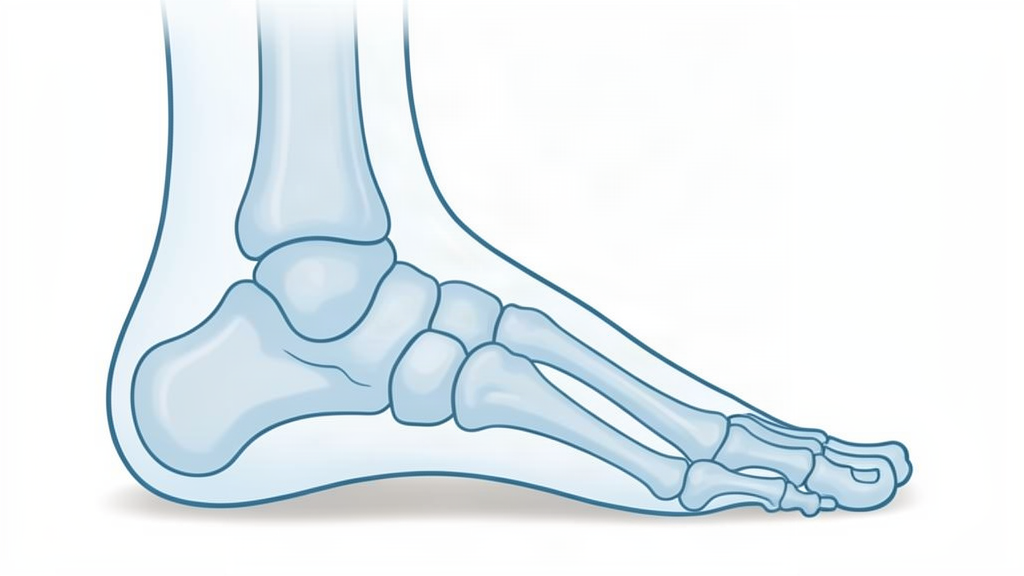
The diagnosis arrives on an X-ray report — "heel spur noted" — and the mind goes straight to the worst interpretation: a spike of bone stabbing the sole with every step. The reality of foot bone spurs is stranger and more useful to understand: the spur itself is usually a symptom, not the villain. Many spurs sit silently in feet that never hurt; many painful "spur" cases are actually the soft tissue around them complaining.
This guide explains what bone spurs in the feet actually are, why they form, the honest evidence on what helps (and what doesn't), and the signs that elevate a spur from X-ray curiosity to doctor conversation. It's the plain-language orientation the radiology report doesn't come with.
Important: bone spurs, heel pain, and especially any new lump or persistent foot pain deserve professional evaluation — this article is general information, not medical advice, and can't see your foot.
(As an Amazon Associate we earn from qualifying purchases. We may also earn commissions from brands listed.)
What a Bone Spur Actually Is
A bone spur (osteophyte) is a bony outgrowth that forms where a joint, tendon, or ligament attaches to bone — the body's long-term response to chronic tension, pressure, or friction at that attachment point. Bone is living tissue; given months-to-years of a pulling or rubbing stimulus, it lays down extra bone at the stress point.
The two most common foot spurs:
| Spur | Where | The force behind it | Classic symptom |
|---|---|---|---|
| Heel spur (plantar) | Under the heel, at the plantar fascia attachment | Chronic pull of the fascia on the heel bone | Bottom-of-heel pain, worst first steps |
| Heel spur (Achilles/back) | Back of the heel, at the Achilles attachment | Chronic rubbing/tension of the Achilles | Back-of-heel pain, aggravated by shoes |
Top-of-foot spurs (at midfoot joints) and big-toe spurs (arthritis-adjacent) also occur, especially with age and joint wear.
Why Spurs Form: The Cause Chain
The common causes, in rough order of frequency:
- Chronic soft-tissue tension — tight calves and plantar fascia pulling at their heel attachments (the classic plantar spur)
- Repetitive impact — running, jumping, standing-heavy jobs
- Shoe friction — tight or rigid shoe backs rubbing the Achilles insertion (back-of-heel spurs)
- Arthritis and joint wear — the osteoarthritis process encourages spurs around worn joints
- Biomechanics — flat feet and overpronation change the pull angles on the fascia
- Age — more years, more cumulative stimulus
- Weight — more load per step, more stimulus per attachment
The key reframe: the spur is the receipt, not the purchase. The chronic tension caused the pain's environment AND the spur; treating only the spur is treating the receipt.
The Strange Truth: Spurs Often Don't Hurt
The research finding that surprises everyone: large percentages of people with heel spurs on X-ray have no heel pain at all — and a majority of "plantar fasciitis" patients with pain don't have a spur. The spur and the pain are related but not identical:
- The pain source in plantar heel pain is usually the irritated fascia and surrounding tissue — the attachment point the spur happens to share
- A spur becomes the direct problem when it's prominent enough to bear weight directly (under-heel spurs with a hard floor, no cushioning) or to rub footwear (back-of-heel spurs against shoe counters)
That's why two people with identical X-rays can have entirely different experiences — and why "bone spur removal" alone is rarely the first answer.
What Actually Helps: The Evidence-Honest Options
The First Line: Mechanics and Load (Where Most Improvement Happens)
| Intervention | What it does | Evidence read |
|---|---|---|
| Supportive shoes | Spreads load, cushions strike | The base layer everything else builds on |
| Orthotic inserts | Supports arch, reduces fascia pull per step | First-line recommendation in virtually all guidance (insert picks) |
| Calf/Achilles stretching | Reduces the pull that started the spur | The highest-value free intervention |
| Load management | Less standing/walking volume during flares | Boring, decisive |
| Weight management | Less force per step, long-term | The quiet multiplier |
| Activity adaptation | Softer surfaces, non-impact cross-training | Direct stimulus reduction |
The Symptom Layer: Comfort Measures
- Heel cushions/donut pads — offload the spur area inside shoes (simple, cheap, often enough for hard-floor pain)
- Ice — after long days, for the hot, achy heel
- Night splints — hold the fascia gently stretched overnight; a standard plantar-fasciitis tool that helps the shared cause (tape alternative)
- Massage — the tissue work reduces the tension environment; our 5-technique guide applies directly
What Doesn't Help (Despite Marketing)
- "Spur-dissolving" creams and supplements — no topical product dissolves bone; the claim is anatomy-proof
- Detox pads and ionic baths — the recurring foot-care scam family (the honest breakdown)
- Aggressive "bone-crushing" massage tools on the spur itself — grinding on bone adds irritation, not relief
The Medical Layer: When Doctors Enter
When months of first-line care fail, the escalation ladder is real: immobilization boots, corticosteroid injections (for the inflamed tissue — with limits on frequency), physical therapy, extracorporeal shockwave therapy — and surgery only for the stubborn minority whose spurs mechanically interfere (prominent back-of-heel spurs against shoes are the most classic surgical case).
Surgery honesty: spur removal exists, but it's a last-resort minority path — because removing the spur without changing the forces that built it invites a rematch. The forces are the disease; the spur is the fossil record.
Heel Spur vs Plantar Fasciitis: The Confusion, Cleared
| Plantar fasciitis | Heel spur | |
|---|---|---|
| What it is | Irritation of the fascia band | Bony outgrowth at the bone attachment |
| Diagnosis | Symptoms + exam (X-ray optional) | X-ray only |
| Pain pattern | Bottom-heel pain, worst first steps | Often silent; pain when prominent |
| First-line care | Identical: shoes, inserts, stretching, load | Identical |
| Why the confusion | They share the same heel address and the same causes | Same |
The practical upshot: whether the X-ray shows a spur or not, the first-line care is the same — which is why doctors often don't bother X-raying early heel pain.
When a "Spur" Is Something Else Entirely
See a doctor promptly — don't self-diagnose a bone spur — when the lump or pain:
- Appeared after an injury (possible fracture)
- Is growing visibly (any enlarging foot lump deserves evaluation)
- Is a firm lump in the arch (that's plantar fibroma territory — a different structure entirely)
- Comes with numbness, burning, or toe symptoms (nerve signs)
- Follows with fever, redness, or heat (infection/other)
- Is one-sided and worsening over weeks
The X-ray that found your spur can only happen through a doctor — that's the right entry door anyway.
FAQ
Do foot bone spurs go away on their own?
No — once formed, a spur is stable bone and doesn't dissolve naturally. But that's less important than it sounds: the pain usually comes from the soft tissue at the attachment, and that responds well to shoes, inserts, stretching, and load management. Many spur owners end up pain-free with the spur still on the X-ray.
What causes a bone spur on the heel?
Chronic tension at the heel's attachments — the plantar fascia pulling underneath (plantar spur) or the Achilles rubbing at the back (posterior spur) — over months to years. Tight calves, flat feet, standing-heavy work, impact sports, and weight all raise the stimulus.
Can a heel spur break off or dissolve?
Spurs very rarely fracture and don't dissolve with creams or supplements. The anatomy doesn't allow topical chemistry to remove bone — treat any "spur dissolver" claim as a scam. Genuine surgical removal exists but is a last-resort path for mechanically problematic spurs.
What helps heel spur pain fast?
The fastest honest relief: cushioned heel pads or donut pads in supportive shoes (offloading the area), ice after long days, and reduced standing/walking while the flare settles. The durable fix is mechanical: inserts, stretching, and better shoes addressing the pull that caused it.
Is a heel spur the same as plantar fasciitis?
They're related but different — plantar fasciitis is irritation of the fascia band, a heel spur is a bony outgrowth at that band's attachment. They share the same causes, the same first-line care, and often coexist; whether the X-ray shows a spur rarely changes the initial treatment.
When does a heel spur need surgery?
Rarely — typically for the stubborn minority after months of failed conservative care, or when a prominent spur (usually back-of-heel, against shoe counters) mechanically interferes with daily life. Surgeons also try to correct the forces that built the spur, not just the spur itself.
Comments