title: Happy Feet Massage Chairs & Spas: Full Guide meta: Happy feet massage at home: the best massage chairs, foot spas and massagers compared — what each costs, what actually helps sore feet, and how to choose.
Happy Feet Massage Chairs & Spas: Full Guide
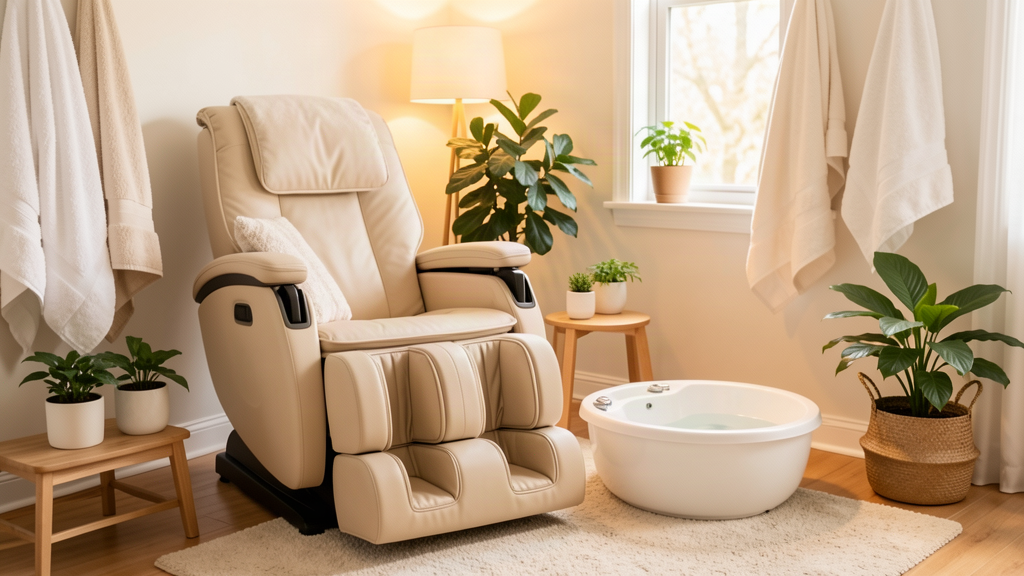
Everyone wants happy feet — the phrase covers everything from the corner nail salon's "happy feet massage" special to premium massage chairs that cost more than a used car. But if you're searching for ways to give your own aching feet that end-of-spa bliss at home, the options are genuinely confusing: foot spa tubs, shiatsu kneaders, compression leg wraps, zero-gravity chairs, and massage chairs with dedicated foot rollers.
This guide sorts the entire happy feet massage spa category into plain English: what each device class actually does, what it costs, and which one matches your feet. It's written for people who stand all day, deal with chronically tired feet, or just want to recreate that post-pedicure float without a $6,000 chair purchase. We compared specs, prices, and thousands of owner reviews to ground every recommendation.
(As an Amazon Associate we earn from qualifying purchases. We may also earn commissions from brands listed.)
Why Your Feet Are So Unhappy (The Problem Explained)
Tired feet usually have one of three root causes — and knowing yours picks your device class:
- Fatigue and swelling. Standing or sitting for hours slows venous return; fluid pools, feet feel heavy and puffy by evening.
- Tension and stiffness. Tight fascia, cramped toes from narrow shoes, and knotted arch muscles create that "made of stone" feeling.
- Wear-and-tear pain. Heel aches, arch burning, sore metatarsal heads — the slow grind of hard floors, high body weight, and unsupportive shoes.
A foot spa with heat addresses the first cause directly: warm water softens tissue and feels wonderful on swelling. A shiatsu massager addresses the second: mechanical pressure works out stiffness and tension. Massage chairs address all three lazily but expensively. If your issue is the third — persistent pain — devices may help you feel better, but also read our plantar fasciitis guides and consider a podiatrist.
How Each Happy Feet Device Class Actually Helps
Foot Spas: The Classic Happy Feet Spa Ritual
A happy feet spa session at home starts with the oldest tool in the book: warm water. A powered foot spa basin (from about $30 to $80 — see our full foot spa guide or the massager vs spa comparison) adds bubbles, raised massage nodes, and in premium models, jets and heat maintenance.
What it does best: relaxation, warmth for swollen feet, softening calluses before grooming. What it doesn't do: deep muscle work. Water pressure tops out gentle — that's fine for unwinding, not for releasing a knotted arch.
Shiatsu Foot Massagers: Deep Pressure on Demand
Shiatsu machines are the workhorses of at-home foot care — rotating nodes knead the soles while air compression squeezes the feet, and most add heat. Models like the Miko Shiatsu and Nekteck kneader (compared head-to-head in our Miko vs Nekteck battle) run $40–$130. For how kneading, compression, and shiatsu mechanisms differ, read our types explainer.
This is the class to buy if evening foot tension is your main complaint. Many users report real relief from 15-minute daily sessions — see are foot massagers actually good for you? for the benefits rundown.
Compression Leg Wraps: For Feet That Swell
If your unhappy feet come with heavy legs, air-compression wraps that squeeze feet and calves sequentially address the circulation side directly — often better than any pure foot device. Prices run $70–$200 for solid consumer systems.
Massage Chairs: The All-Everything Option
Full massage chairs ($1,000–$10,000) increasingly include serious foot treatment: rollers under the soles, calf airbags, and sometimes full-body zero-gravity positions. A dedicated foot massager under $150 usually outperforms the foot function of a chair ten times its price. Buy the chair for your back; buy the foot machine for your feet.
Manual Tools: The Under-$20 Tier
Rollers, spiky massage balls, and wooden reflexology boards cost pocket change and require zero electricity. They won't replace powered devices for deep work, but they're excellent finishing tools after a soak.
The Best Options by Sub-Use (Our Picks)
| Your situation | Best device class | Concrete pick & price |
|---|---|---|
| Tired, swollen feet at day's end | Heated foot spa | HoMedics Deep Soak (~$60) |
| Knotted arches, evening stiffness | Shiatsu kneader | Miko Shiatsu (~$110) |
| Heavy legs + feet together | Compression wraps | Fit King set (~$130) |
| Whole-body unwind budget | Chair-style seat massager | Human Touch or Idealer seat pad (~$150–$300) |
| Post-run recovery | Recovery sandals + kneader | Oofos slide (~$60) + Nekteck (~$40) |
| Cheapest possible bliss | Manual roller + soak tub | TheraFlow roller (~$20) |
For the hands-on option that costs nothing, don't skip the ultimate guide to foot massage — manual techniques travel anywhere and pair perfectly with a spa night.
How to Choose Your Happy Feet Setup (Decision Table)
| Question | If yes → | If no → |
|---|---|---|
| Do your feet swell by evening? | Foot spa or compression wraps | Kneader or chair |
| Does deep pressure sound good or painful? | Good → shiatsu massager | Painful → spa with gentle bubbles |
| Do your legs ache too? | Compression wrap system | Foot-only device |
| Budget under $60? | Spa tub or manual kit | Save up for a kneader |
| Want a full-body experience? | Massage chair or seat pad | Foot-specific device |
Pro tip: start with the cheapest device that matches your root cause from the list above — you can always upgrade later, and many households end up pairing a spa (ritual, warmth) with a kneader (deep pressure) for under $150 total.
Watch out for: "massage chair" listings under $500 with inflated feature claims. Real L-track chairs with genuine foot rollers start around $1,000 new — anything dramatically cheaper is usually a seat pad or a return risk.
Building Your At-Home Happy Feet Ritual
Hardware is half the equation; ritual is the other half. The households that get the most from any of these devices treat foot care like a coffee ritual — a fixed time, a fixed sequence, small pleasures attached. A pattern that works well: start with 10 minutes in a warm foot spa with Epsom salt while you catch up on a show (the soak softens tissue and starts the relaxation response); follow with 10–15 minutes on your kneader or compression device for the deep-pressure half; finish with two minutes of manual massage on each foot — the ultimate guide linked below has the exact strokes — plus a thick lotion and cotton socks if your skin runs dry. Three evenings a week is enough for most people to feel a meaningful difference in how their feet greet the morning.
Environment matters more than people expect. Keep the spa and massager on a low shelf by the couch or bed — devices that live in closets get used a tenth as often. Fill the spa from a nearby faucet using a pitcher rather than carrying a full tub (wet spilling is the #1 reason people abandon soaks). And make sessions phone-free if you can: the relaxation effect that makes foot massage feel like a mini-vacation depends heavily on actually disconnecting for those 20 minutes.
One last budget note: buy in the order your symptoms point. If swelling leads, the spa or compression wraps come first; if stiffness leads, the kneader comes first. Buying the wrong device first is how the "I have a drawer full of foot gadgets" situation happens — and it's completely avoidable with the decision table above.
FAQ
What is a happy feet massage? In most US cities, "happy feet massage" refers to foot-focused spa treatments offered at nail salons and massage shops — typically a warm soak followed by reflexology-style foot and lower-leg massage. At home, you can recreate it with a heated foot spa, Epsom salts, and a 15-minute session on a shiatsu foot massager or with manual techniques.
How much does a home foot massage setup cost? A complete basic setup — warm-water foot spa and manual roller — runs about $50. A mid-tier setup with a shiatsu kneader and Epsom salts runs $100–$150. Premium setups with compression wraps or massage chairs run $200 to several thousand dollars.
Massage chair or foot massager — which should I buy first? Almost always the foot massager. A $100–$150 shiatsu or compression unit delivers focused relief immediately, while entry-level massage chairs under $1,000 rarely match dedicated foot machines for foot treatment. Buy the chair later if your back and shoulders demand it.
How often can I use a foot spa or foot massager? Most healthy adults enjoy daily 15–30 minute sessions without issues; manufacturers commonly recommend at least that. If you have diabetes, reduced foot sensation, or circulatory conditions, ask a healthcare professional first and keep sessions shorter and moderate.
Do I need heat in a foot massager or spa? Heat is the main point of a foot spa — warm water defines the experience. In a kneading massager, heat is a pleasant bonus rather than essential; buy for pressure quality first.
Are those $40 foot massage places worth it? For occasional indulgence, many people find them a great value. But at weekly visits, $160/month buys a $130 shiatsu foot massager outright in under five weeks — after which your per-session cost drops to electricity.
Comments