Leg Massager Machines: Full Buyer's Guide
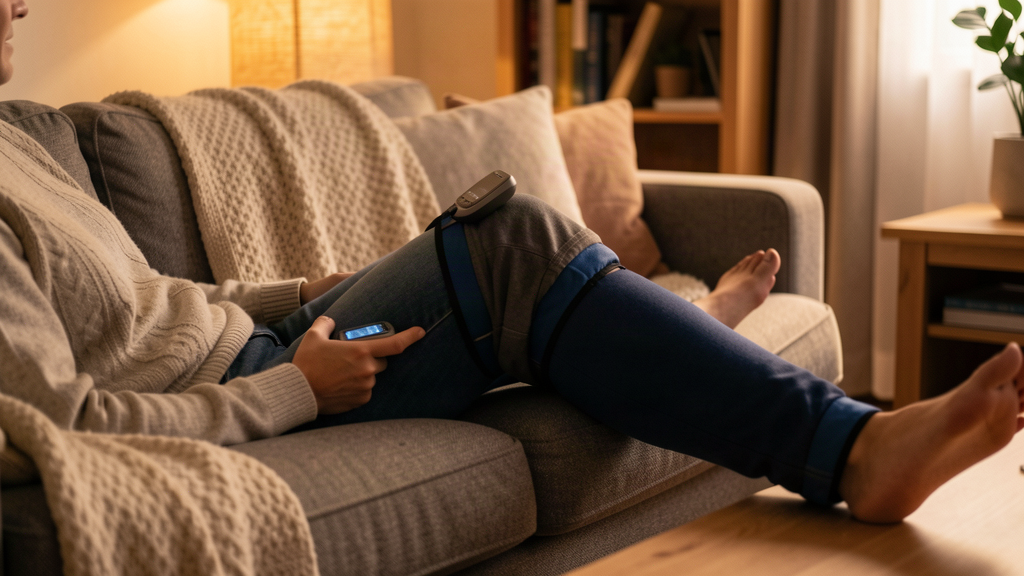
The leg massager machine category grew up around athletes — compression boots in pro training rooms — and then quietly moved into living rooms: nurses after 12-hour shifts, travelers after long flights, runners after marathon Saturdays, and anyone whose legs feel heavy by dinner. The machines split into three fundamentally different types, and buying the wrong one is the category's most common mistake.
This buyer's guide covers everything: the three machine types and what each actually does, ranked picks per use case, sizing and safety notes, and the honest comparison to what a massage gun or a spa visit delivers. Based on specifications and thousands of verified owner reviews — mechanism-first, as always.
(As an Amazon Associate we earn from qualifying purchases. We may also earn commissions from brands listed.)
Quick Picks
| Award | Pick | Mechanism | Price tier |
|---|---|---|---|
| 🏆 Best Overall | Air compression boots (Fit King/Normatec-class) | Sequential squeeze | $70–250 |
| 💰 Best Budget | 2-chamber compression sleeves | Simplified squeeze | $50–80 |
| 🦵 Best Calf+Foot Combo | Foot-and-calf sleeve machine | Squeeze, feet included | $100–180 |
| 🏥 Best Clinical | Vibration plate (MedMassager-class) | High-frequency vibration | $200+ |
| 🎯 Best Precision | Massage gun with calf attachment | Percussion | $100–300 (shared use) |
The Three Machine Types (Get This Right First)
| Type | What it does | What it's for | What it's NOT for |
|---|---|---|---|
| Air compression | Sleeves inflate chamber-by-chamber, squeezing legs upward | Swelling, heaviness, post-stand/post-flight recovery | Deep tissue knots, fascia work |
| Vibration plate | High-frequency vertical vibration through the soles/legs | Circulation comfort, gentle stimulation | Swelling drainage (weaker than compression) |
| Massage gun (percussion) | Targeted pulses into specific muscles | Knots, tight calf spots | Whole-leg fatigue, passive use |
The category's #1 buying error: expecting compression to "massage" (it squeezes, doesn't knead) or expecting a plate to fix swelling (compression does that job far better). Match the mechanism to the complaint before comparing brands — the full mechanism map lives in our types explainer.
The Picks
1. Air Compression Machines — Best Overall
The category's heart: wrap sleeves (foot-to-thigh or foot-to-knee) with sequential chamber inflation — ankle, calf, thigh in a wave — reproducing the recovery boots athletes use after hard training. Modern machines offer 3–6 intensity levels, multiple modes, and heat on some models.
Why it wins overall: it's the only machine type that addresses the legs' most common end-of-day complaint — fluid pooling — with a mechanism that does genuine work. Owner review patterns are the strongest in the category: "my legs feel light again" is the recurring theme from nurses, teachers, retail and warehouse workers.
Best for: standing professions, travelers, post-workout recovery, pregnant-leg heaviness (with doctor OK), sedentary-work legs. Full ranked roundup: best air compression leg massagers.
Chamber note: more chambers = more graduated, massage-like wave; 2-chamber budget units still work but feel cruder.
2. Budget Compression Sleeves — The Entry Point
The $50–80 versions simplify to 2 chambers and fewer modes — the same mechanism, rougher execution. For trying the category without commitment, they're the honest entry; upgrade when the routine proves itself.
Owner pattern: satisfaction is high for the price; the complaints are blast strength (less squeeze) and durability at the extreme budget end.
3. Foot-and-Calf Machines — The Combo Format
The all-in-one machines (sleeves + foot compression chambers, sometimes kneading nodes) cover both legs and tired feet in one session — the fit for people whose complaints span both. Our foot & calf massager roundup ranks the format's best; the honest note is that the combos execute compression well but their "kneading" is usually the weaker half.
4. Vibration Plates — The Clinical Adjunct
The MedMassager-style platform (review): high-frequency vibration through the feet and up the legs — the machine for circulation-comfort routines and the clinical-rehab adjacent. Power is its identity; comfort features are not. Best as a specialist tool within a routine rather than an all-rounder.
5. Massage Guns — The Precision Tool
Not a "leg massager machine" in the wrap sense, but the answer for specific knots: a percussion gun with a soft attachment works calf tightness in ways sleeves can't (the feet-adjacent guide covers the plantar use case). The limitation is you (someone has to operate it) and intensity discipline on delicate tissues.
Comparison Table
| Pick | Mechanism | Coverage | Intensity levels | Heat | Passive use? | Noise | Price |
|---|---|---|---|---|---|---|---|
| Compression boots (full) | Sequential squeeze | Foot–thigh | 3–6 | Some models | Yes | Hum | $120–250 |
| Budget sleeves | 2-chamber squeeze | Foot–knee | 2–3 | Rare | Yes | Hum | $50–80 |
| Foot+calf combo | Squeeze ± knead | Feet + calves | 3–5 | Some | Yes | Hum-moderate | $100–180 |
| Vibration plate | Vibration | Soles/legs | 5–11 | No | Yes | Louder | $200+ |
| Massage gun | Percussion | Where you aim | 3–6 | Some | No | Moderate | $100–300 |
Sizing and Fit: The Category's Hidden Decider
Compression lives or dies on fit:
- Measure, don't guess — calf circumference and leg length against the manufacturer's chart; too-loose sleeves deliver nothing, too-tight borders discomfort
- Sleeve adjustability — Velcro-wrap designs (Fit King-style) fit more leg shapes than fixed pockets (our Fit King review covers the format's fit behavior)
- Thigh extension — most complaints live calf-down; buy thigh chambers only if you actually need them
Safety Notes (The Short Honest List)
- Blood clots/DVT: compression over an active or suspected clot is genuinely dangerous — doctor first, no exceptions
- Vascular conditions, recent surgery, pregnancy: the doctor conversation comes before the checkout button
- Neuropathy or reduced sensation: you can't feel over-squeeze — gentler settings plus a doctor's guidance (neuropathy guide)
- Session discipline: 15–20 minutes at moderate settings is the sweet spot; more isn't better
The Category vs the Alternatives
| Alternative | What it does better | What the machine does better |
|---|---|---|
| Spa/soak | Relaxation, warmth | Actual fluid drainage, hands-free |
| Massage gun | Specific knots | Whole-leg passive recovery |
| Manual stretching | Flexibility work | Circulation, zero effort |
| Elevating legs (free) | Zero cost | Active, sustained, while you watch TV |
The honest stack: elevation + compression + stretching covers 90% of home leg care at every budget.
The Maintenance Notes Machines Never Ship With
Compression machines have their own quiet failure points: air hoses (don't kink them in storage — lay them flat or coiled loose), sleeve Velcro (it clogs with lint and fabric fibers; a lint brush monthly keeps the grip honest), and the pumps' intake filters on higher-end units (three minutes, quarterly). None of this is glamorous; all of it is the difference between a machine that lasts two years and one that lasts ten. The other universal: store the controller dry and unplugged, and never yank connectors by the cord — the strain relief on budget units is the first thing to fail.
The Mechanism Matching (Deep Version)
The three machine types answer different physiological complaints — the deep version of the matching logic:
Compression → fluid complaints. The veins return blood against gravity using the calf muscles' squeeze; idle calves (standing-still jobs, long sitting, long flights) leave fluid pooling. The machine's sequential chambers are an external calf-pump — the reason the mechanism's happiest users are nurses, travelers, and desk workers (the swelling guide).
Vibration → stimulation complaints. The nerve-and-muscle stimulation that clinics use for circulation comfort and gentle activation — the mechanism between doing nothing and doing compression (the circulation guide ranks the hierarchy honestly).
Percussion → tissue complaints. The muscle-knot work that neither of the others touches: specific spots, specific pressure, the massage-therapist input in tool form (the athletic guide covers the protocols).
The three mechanisms don't compete — they answer different windows of the same long day. The complete home setup stacks two of the three; the single-machine household picks by its dominant window.
The Session Science (When and How Long)
The timing that maximizes each mechanism:
- Compression: within 2 hours of the heavy period (post-shift, post-flight, post-run) — the drainage window when fluid is actually pooled; 15–20 minutes at moderate settings
- Vibration: any time, with the evening being the classic (the wind-down usage) — 15 minutes is the standard window
- Percussion: on the specific tissue, after warming (movement or shower improves tolerance) — 5 minutes per muscle group, never on bone or tendon
The daily-vs-rest-day question, answered per mechanism: compression tolerates daily (gentle mechanism); percussion respects the tissue's recovery (spot work 3–4×/weekly); vibration sits between. More isn't better anywhere — session discipline is the category's quiet rule.
The Household Sizing Guide
The fit questions that decide satisfaction, consolidated:
- Calf circumference at the widest point — the sleeve-sizing measurement that outranks shoe size
- Adjustable vs fixed formats — Velcro-adjust (the Fit King-class) for real calves and shared households; fixed formats for median legs only
- Thigh coverage: needed or not? — most complaints live calf-down; buy thigh chambers only for thigh-specific complaints
- Two users, one machine — the adjustables' user-profiles (where offered) or the 20-second settings courtesy
- Storage shape — flat-folding sleeves store anywhere; boot formats need their shelf
The Price-Tier Reality Check
The honest tiering across all three mechanisms: the $50–80 tier delivers the core experience with compromises (fewer chambers, lighter motors, shorter warranties); the $80–150 tier is the value sweet spot where the serious machines live; the $150+ tier buys refinement (smoother waves, better builds, app ecosystems) rather than more relief. The category's best-value answers at every tier are covered in the roundups — the compression ranking and the all-types field guide.
The Format Reality Check (Boots, Sleeves, and the Rest)
The physical formats the machines arrive in — and what each shape implies:
- Boot-format (fixed leg chambers): the recovery-boot silhouette — slide the leg in, zip, run. The most "clinical-experience" format; the least forgiving on non-standard legs. Best for median-shaped athletes; the format the flagship tier standardized
- Wrap-format (Velcro sleeves): the adjustable camp — wrap each zone to the actual leg, re-wrap for the next user. Best for real calves, shared households, and comfort-focused users (the Fit King-class)
- Foot-and-calf combo: the all-in-one session machines — both zones, one controller (the combo guide ranks them)
- Compact/handheld compression: the travel formats — smaller bladders, weaker waves, packable shapes (the portable guide)
The format decides fit-tolerance more than the spec sheet admits: boots assume, wraps adapt, combos cover, compacts travel.
The Controller and Usability Deep-Dive
The interface you'll use tired, in dim light, mid-evening — the honest usability ranking:
- Physical dials and buttons — the evening-proof standard; big, tactile, findable without glasses
- Handheld tethered controllers — the compression category's classic; the 20-button models over-deliver (most users use three)
- Touch panels — elegant in daylight, fumbling in dim rooms; the premium-tier aesthetic
- App control — the convenience layer that also adds the pairing-friction layer; never the sole interface (the honest pattern from the review world)
The under-considered usability spec: presets you'll actually use — the machines with three memorable modes out-serve the machines with fifteen indistinguishable ones.
The Safety Section, Complete
The medical gates for the whole category, consolidated (the detailed guides cover the physiology):
- Suspected DVT/clots: hard stop, urgent care — compression over an active clot is the category's one genuinely dangerous mistake
- Vascular disease, cardiac conditions: the doctor conversation first, always
- Significant sensory loss: the over-squeeze you can't feel — the neuropathy rules apply
- Recent surgery, pregnancy: clearance before sessions
- Skin conditions on the legs: healing before squeezing
- Session discipline: 15–20 minutes, moderate settings, the brace-test's equivalent (discomfort → lower, pain → stop)
The category's honest risk profile: gentle for healthy users, genuinely dangerous for exactly one condition (clots) — the gates exist because that one condition is silent until it isn't.
FAQ
What is the best leg massager machine?
For most legs, an air compression machine with adjustable sleeves (Fit King/Normatec-class) — sequential compression is the mechanism that addresses swelling and heaviness directly, with strong owner-review track records. Budget buyers get the honest entry at 2-chamber sleeves; knot-specific complaints want a massage gun instead.
Do leg compression massagers really work?
For fluid-related complaints — end-of-day swelling, post-flight heaviness, post-stand fatigue — yes, meaningfully: sequential compression mechanically assists the veins' return job, the same principle as medical recovery boots. For deep-tissue knots, no — that's percussion or hands territory.
Air compression or vibration plate for circulation?
Compression, for the fluid-pooling majority — the squeeze does measurable drainage work. Vibration plates suit circulation-comfort routines and clinical-adjacent use, but as a drainage tool they're second to compression on the evidence and owner reports alike.
Can I use a leg massager every day?
Most healthy users can — 15–20 minute daily sessions at moderate intensity are the standard pattern in owner reports. The exceptions needing medical input first: suspected clots, vascular conditions, significant sensory loss, pregnancy, and recent surgery.
Are leg massagers good for varicose veins?
They may comfort — compression can ease the heavy, aching feeling varicose legs report — but they don't treat the veins themselves. Varicose-vein care is a vascular-doctor conversation; the machine is the comfort layer alongside it.
What's better, a leg massager or a massage gun?
Different jobs: the massager machine does passive whole-leg recovery (swelling, heaviness, fatigue) while the gun does targeted knot work on demand. Athletes and standing-profession owners commonly use both — the machine daily, the gun for specific spots.
Comments