Best Foot Rollers: Cheap Relief Tools That Work
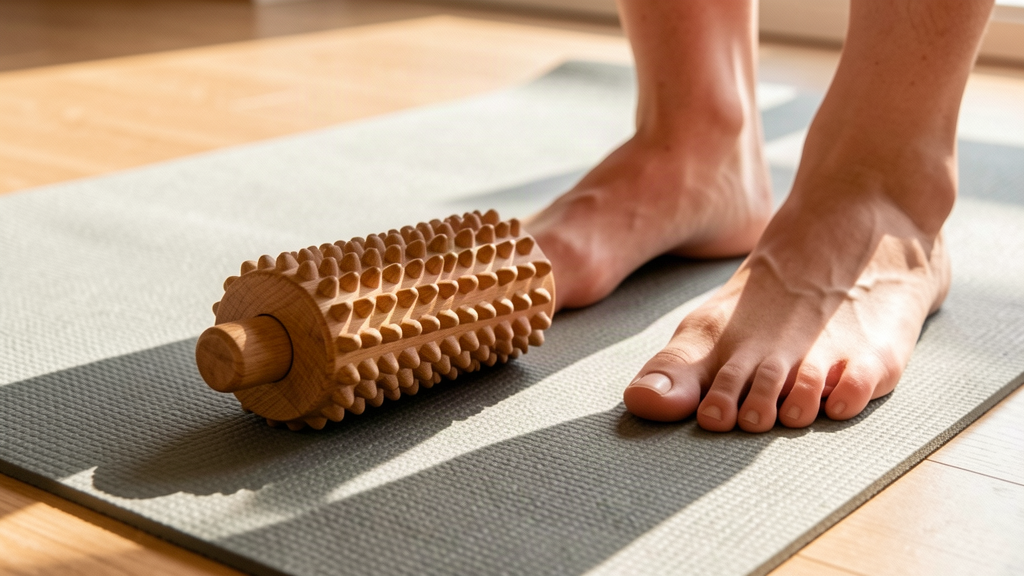
The foot roller is foot care's most honest product: a $15 piece of wood or textured plastic that delivers the same tissue-work mechanism as $200 machines, with total pressure control and nothing to break. Physical therapists have recommended roller-style arch work for decades — the frozen water bottle in the plantar fasciitis literature is the same tool in free packaging.
This guide ranks every foot roller massager format — the wooden classics to the powered upgrades — explains the techniques that make them work (the tool is only half the equation), and covers who they serve best and where machines earn their price back. Based on specifications, materials, and thousands of verified owner reviews.
(As an Amazon Associate we earn from qualifying purchases. We may also earn commissions from brands listed.)
Quick Picks
| Award | Pick | Why | Price |
|---|---|---|---|
| 🏆 Best Overall | Textured wooden roller (TheraFlow-class) | Multi-zone texture, durable, the standard | $15–25 |
| 🎯 Best Precision | Lacrosse-style massage ball | One-spot pressure control | $10–15 |
| 🥶 Best for Flares | Frozen water bottle | Ice + massage, free | $0 |
| ⚡ Best Powered | Vibrating roller | Roller + vibration combo | $30–60 |
| 🧳 Best Travel | Mini pocket roller | Office and travel format | $8–15 |
Why Rollers Work: The Mechanism
Arch pain's classic mechanism is mechanical: tight, guarded fascia and small foot muscles that need pressure-and-release work — exactly what a kneading machine automates. A roller delivers the same input with three genuine advantages:
- You control every gram — the pressure adapts per spot, per day, per flare level. Machines guess; rollers know
- Nothing breaks, nothing charges — wooden rollers outlive their owners
- The technique scales — gentle days get gentle rolls; heavy days get sustained pressure
The honest trade: rollers demand you — a machine works while you watch TV; a roller works only while you do. That's the whole buying decision between them (the massager comparison).
The Formats, Ranked
1. Textured Wooden Rollers — The Standard
The archetypal product: a contoured wooden roller with nodules across its surface, often on a frame, worked underfoot seated. The texture adds tissue-grab to the roll (better fascia engagement than smooth cylinders), and the wood's hardness delivers real pressure at body weight.
Owner pattern: the most-repeated phrases in reviews are "surprised how much it helps" and "use it every night while watching TV" — the $20 surprise that outperforms expectations. The complaints cluster on hard floors (put a mat under it) and initial discomfort (start seated, lighter pressure, build up).
2. Massage Balls — The Precision Specialists
Not technically rollers, but the format's nearest cousins and the better pick for pinpoint work: a lacrosse-style ball or a spiked massage ball targets one spot at a time — the inner-heel edge, a mid-arch knot, the ball of the foot. Full guide: foot massage balls.
The technique note: balls reward the "find it and stay" approach — sustained pressure on a tender spot for 20–30 seconds, then movement. Rollers reward the sweep. Most owners end up with both: one for coverage, one for precision.
3. The Frozen Bottle — The Flare Tool
The physical-therapy classic: a full water bottle frozen, rolled under the arch after hard days. Ice numbs the acute ache while the rolling does its tissue work — the flare-day protocol's most-cited tool (the routine).
Technique: keep the foot moving (never park the ice), 3–5 minutes, and reserve it for hot, swollen end-of-day arches — cold first thing in the morning can make stiff tissue stiffer.
4. Vibrating Rollers — The Powered Upgrade
The format's motorized branch: a textured roller with an internal vibration motor — the manual mechanism plus the vibration layer's calming input. For owners who love rolling but want the buzz, these are the honest $30–60 upgrade; for everyone else, the plain roller does 90% of the job.
5. Mini Pocket Rollers — The Travel Format
Finger-sized rollers for office desks and travel kits — the portable guide covers the format: less coverage, same mechanism, zero luggage cost.
Comparison Table
| Format | Coverage | Precision | Intensity control | Cold option | Power | Price |
|---|---|---|---|---|---|---|
| Textured wooden roller | Full arch | Medium | Your weight | Freeze a bottle instead | None | $15–25 |
| Massage ball | Single spot | Maximum | Your weight | Frozen-ball versions | None | $10–15 |
| Frozen bottle | Full arch | Medium | Your weight | Built-in | None | $0 |
| Vibrating roller | Full arch | Medium | Weight + levels | No | Battery | $30–60 |
| Mini roller | Partial | Medium | Your weight | No | None | $8–15 |
The Techniques (Where the Value Lives)
The Standard Evening Roll
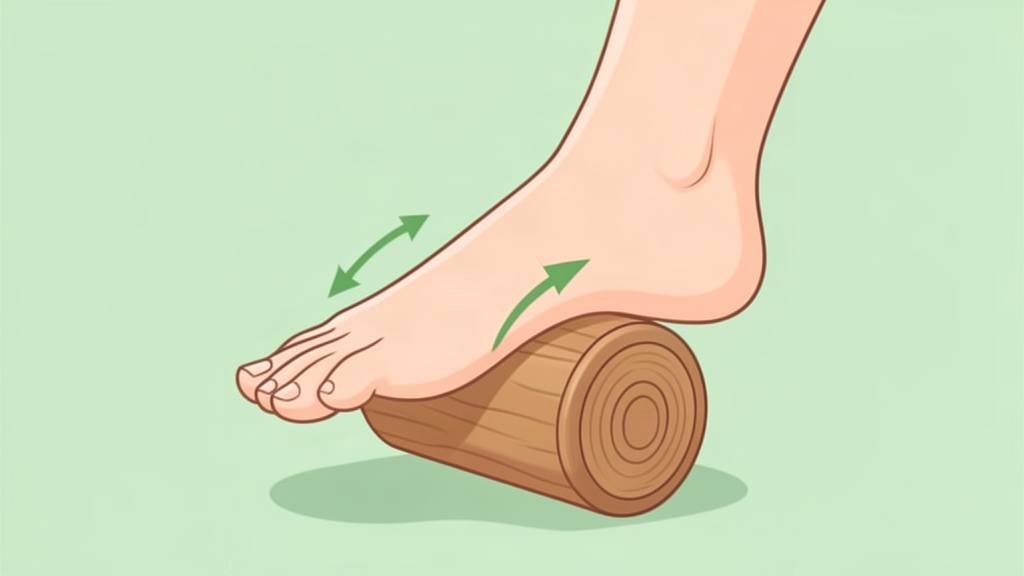
Seated, roller under the arch, moderate pressure: roll heel-to-toe slowly for 2–3 minutes per foot, pausing 5–10 seconds on tender spots. Follow with calf stretching — the roller loosens the tissue, the stretch lengthens the chain (technique guide).
The Morning Protocol
Before the first steps: 60 seconds of gentle rolling while still sitting on the bed's edge — the fascia's warm-up before it takes the day's load. The nightstand roller is the classic setup (slippers, too — the morning routine).
The Flare-Day Rules
Gentler, shorter, colder: halve the pressure, halve the time, add the frozen bottle. Sharp pain during rolling means stop — flares are for calm, not conquest.
The Desk Footprint
The under-desk roller is foot care's most sustainable habit: shoes off, gentle rolls during meetings and emails, zero dedicated time. Owners who build this habit report the highest consistency of any tool format — the work disappears into the day.
Who Rollers Serve Best (And Who Should Upgrade)
Rollers first when: the budget is under $50, the complaint is arch pain/plantar-style, consistency habits are strong (or desk-bound), or as the travel/companion tool alongside a machine.
Machines earn their price when: hands-free sessions are the only ones that will happen, heat is a daily need, swelling needs compression (rollers can't), or dexterity/bending makes floor-rolling impractical. The honest stack: roller for tissue work + machine for convenience + the pairing logic in the field guide.
The Material Question: Wood vs Plastic vs Metal
The roller aisle's quiet variable: wooden rollers (the classic) run firm with texture that grips tissue; plastic/textured models run slightly softer with mass-produced consistency; metal/marble rollers stay cool (the chilled-relief crowd's pick) and nearly indestructible. The honest guidance: wood for the traditional firm feel, plastic for budgets and travel, cold-material rollers for the inflammation-responsive — the mechanism works through all three.
The Closing Note
Pick by feel and budget; the arch cannot read the label — and the best roller is the one that's within reach every night.
The Full Technique Library
The roller's value lives in technique — the complete library, beyond the basics:
The Zone Sweep (The Morning Standard)
Heel-to-toe, three lines: inner arch (the plantar-fasciitis highway), mid-sole (the general tension zone), outer edge (the stabilizers). Five slow passes per line, first thing in the morning while seated on the bed's edge — the fascia's pre-load warm-up before the day's first steps.
The Sustained Hold (The Knot Work)
Roll slowly until finding the tender spot — then stop and stay: 20–30 seconds of sustained, tolerable pressure, breathing through it. The deep-work move that separates rolling-for-coverage from rolling-for-results. Two or three holds per foot per session; more is bruising, not working.
The Progressive Pressure Ladder (The Week-One Protocol)
Day 1–2: seated rolling, light pressure (the tissue's introduction). Day 3–4: seated, moderate. Day 5–7: standing rolls if tolerated (body weight's full pressure). Week two onward: your personal level, found honestly. The ladder prevents the classic week-one mistake — going straight to standing-full-weight on unconditioned tissue and reading the resulting soreness as harm.
The Pin-and-Stretch (The Advanced Move)
Roller pinning a spot under the arch while the toes flex-and-extend slowly — the pin-and-stretch technique that works the fascia under tension. The move physical therapists teach for stubborn mid-arch knots; ten toe-flexes per pinned spot.
The Cold-to-Warm Contrast (The Athlete's Version)
Frozen-bottle rolling for 2 minutes, then warm hands or a warm towel for 1 — the contrast technique the athletic crowd uses after hard efforts. Cold quiets the acute ache; warmth follows with the relaxation window. Two rounds, done after the event (not before).
The Under-Desk Autopilot
The low-effort habit format: shoes off, roller under the desk, gentle rolls during the workday's dead minutes. The technique ceiling is low (no sustained holds) but the consistency ceiling is high — the desk roller out-habits every dedicated session by disappearing into the day.
The Roller vs. The Rest: The Complete Decision Matrix
| Your need | Roller | Ball | Machine | Tape | Socks |
|---|---|---|---|---|---|
| Daily arch maintenance | ★★★★★ | ★★★★☆ | ★★★☆☆ | — | — |
| One specific spot | ★★★☆☆ | ★★★★★ | ★★☆☆☆ | — | — |
| Hands-free sessions | — | — | ★★★★★ | — | — |
| Flare-day gentleness | ★★★★☆ | ★★★☆☆ | ★★★☆☆ | — | — |
| Support during steps | — | — | — | ★★★★★ | — |
| Swelling hours | — | — | ★★★★☆ | — | ★★★☆☆ |
| Travel format | ★★★★☆ | ★★★★★ | ★☆☆☆☆ | ★★★☆☆ | ★★★★★ |
The pattern: rollers win the daily-maintenance window; every other column is a specialist's win. The $25 roller-plus-ball kit covers the two leftmost columns completely — the foundation every other tool builds on.
The Physio-Adjacent Facts (What Rolling Actually Changes)
The honest mechanism review: rolling provides pressure-and-release input to fascia and small muscles (the tissue-relaxation response), local circulation stimulation (the pressure-moving-fluid effect), and sensory recalibration (the nervous system's re-tuning of the area's sensitivity). What it doesn't provide: stretching (the tissue-lengthening that calves and fascia also need — pair the roller with the stretches), structural support (the insole-and-shoe layer's job), or inflammation treatment (flare management is the medical side of the routine).
The evidence-adjacent summary: rolling is the tissue-work layer of a multi-layer routine — the layer that costs $15 and earns its counter space every single evening.
The Roller's Role in the Complete Foot-Care Stack
The $15 tool's honest position among the whole toolkit — the layers, in load-order:
- Footwear and inserts — the load-management layer (the insoles guide): changes the forces before they arrive
- Rolling/ball work — the tissue-maintenance layer (this guide): daily pressure-and-release on the fascia and small muscles
- Stretching — the length layer (calves and fascia): the routine's flexibility half
- The machine sessions — the convenience layer (the roundups): the same tissue work, hands-free
- Load and lifestyle management — the multiplier layer: body weight, standing hours, training progression
The roller's specific seat: the daily-maintenance workhorse — the tool that does the tissue layer's job at the lowest cost and highest consistency. Every other layer is either upstream (changing the load), downstream (making maintenance easier), or parallel (length and lifestyle).
The Six-Week Rolling Curriculum (For New Sufferers)
The progression that takes a plantar-fasciitis newcomer from flinch-and-limp to routine:
Weeks 1–2 — the gentle introduction: the morning 60-second seated roll + the evening 2-minute session at light pressure. The wins: the morning steps' edge taken off, the tool's feel learned. The discipline: no standing rolls, no sustained holds yet — the tissue's trust period.
Weeks 3–4 — the working addition: add the sustained holds (two per foot, 20 seconds), standing rolls if tolerated, and the pin-and-stretch after the holds. The wins: specific knots yielding, the arch's daily baseline shifting. The discipline: the brace-test — sharp pain means back to week-1 gentleness, not forward.
Weeks 5–6 — the full library: the complete technique set above, at your honest level, in the morning-evening rhythm. The wins: the routine becomes boring — which is the goal. The discipline: the next-morning verdict ("better or worse?") stays the daily instrument.
Beyond: the maintenance rhythm — the routine that the six weeks built, kept for as long as the feet want it. The roller outlasts every machine in the drawer precisely because it asks so little and gives so consistently.
The Skeptics' Questions, Answered
"Isn't this just rubbing my foot on a stick?" — Mechanically, yes; that's the point. The stick's geometry delivers directed, metered pressure to tissue that responds to exactly that input — the physical-therapy consensus behind the frozen-bottle routine isn't placebo architecture, it's pressure-and-release physiology (the technique library is the manual).
"Why not just buy the machine?" — The machine does the same work hands-free at 5–10× the price; the roller does it with total pressure control at $15. The honest answer is usage-archetype: hands-free households buy machines, precision-and-habit households buy rollers, veterans own both (the pairing logic).
"How long until it works?" — The morning-edge effect: days. The baseline shift (the arch's daily starting point): weeks 2–4 of the curriculum. The honest ceiling: rolling maintains and comforts — it doesn't fix load errors (shoes, training spikes) or replace the stretching layer. It's the routine's most reliable worker, not its only one.
FAQ
Do foot rollers actually work?
Yes — for arch pain and plantar-style complaints, rolling delivers the same tissue-work mechanism physical therapists have long recommended (the frozen-bottle routine's cousin). The caveats: you supply the work, technique matters (see above), and consistency is the mechanism's price of admission.
What is the best foot roller for plantar fasciitis?
A textured wooden roller for daily arch work, plus a lacrosse-style ball for spot precision — combined, $25, the standard kit. For flare days, the frozen water bottle adds the ice layer. Full plantar toolkit: the guide.
Is a frozen water bottle as good as a foot roller?
For its specific window — hot, swollen flare days — it's better: ice plus massage in one free motion. For daily maintenance, the textured roller's surface and dedicated shape serve better. The two aren't rivals; they're day-types.
How long should I roll my foot?
2–3 minutes per foot per session is the standard window — morning (60 seconds) and evening (2–3 minutes) being the classic pairing. More isn't better: sustained aggressive rolling bruises tissue; short consistent sessions win.
Can a foot roller replace a massage machine?
For tissue work, mostly yes — the mechanism is the same. Machines earn their keep on hands-free convenience, heat, and compression (which rollers don't do at all). Many owners run both: the machine for the nightly session, the roller for the in-between windows machines can't fill.
Are vibrating foot rollers worth the extra cost?
For vibration-lovers, yes — the buzz adds the calming layer to the rolling work. For everyone else, the plain roller delivers ~90% of the benefit at half the price; spend the difference on a massage ball instead.
Comments