Foot Massage Balls: The $10 Fix
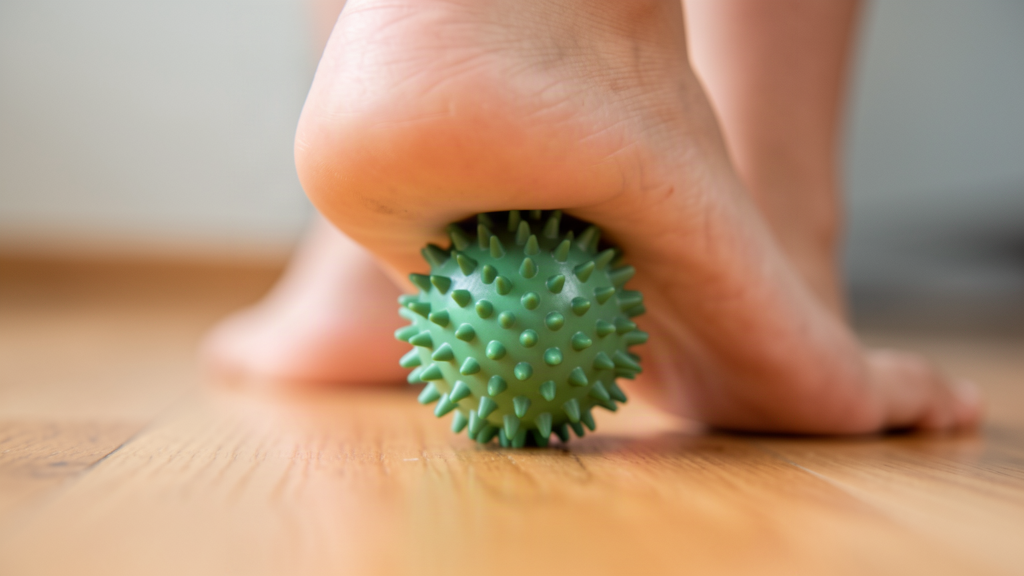
The cheapest powered-massage alternative in existence: a ball on the floor. But "cheap" undersells it — a massage ball delivers pinpoint-pressure tissue work with more control than any machine offers, in a package that weighs nothing, breaks never, and travels anywhere. Physical therapists hand out ball routines for arch pain because the mechanism is real: directed pressure on guarded tissue.
This guide covers the ball types (they're genuinely different tools), the techniques that make a $10 purchase outperform expectations, and the honest comparison to rollers and machines. Based on materials, design, and thousands of verified owner reviews.
(As an Amazon Associate we earn from qualifying purchases. We may also earn commissions from brands listed.)
Quick Picks
| Award | Pick | Why | Price |
|---|---|---|---|
| 🏆 Best Overall | Lacrosse ball (standard) | The pressure goldilocks | $8–12 |
| 🌵 Best Texture | Spiky/trigger ball | Grip + stimulation layer | $10–15 |
| 🥜 Best Two-Foot | Peanut ball | Both feet or Achilles corridor | $10–15 |
| 🧊 Best Flare | Frozen gel ball | Cold + pressure combined | $12–18 |
| 🏐 Gentlest | Soft tennis-style | Beginner floor | $3–8 |
Why a Ball Works: The Mechanism
Muscle and fascia respond to sustained, directed pressure — the "find the spot and stay" input that massage therapists deliver with thumbs and elbows. A ball under your foot does the same job with your body weight supplying the force:
- Pressure you meter in real time — lean harder, ease off, micro-adjust position by a millimeter. Machines have settings; balls have a continuous dial
- Pinpoint precision — the inner-heel edge, a mid-arch knot, the space between metatarsal heads: spots full-sized rollers and machine nodes can't isolate
- The brain-engagement bonus — you feel exactly where the work happens, which makes routines intuitive rather than programmatic
The honest trade, same as the roller guide: the ball works only while you do. Convenience is the machine's department; precision is the ball's.
The Ball Types, Honestly Compared
Lacrosse Ball — The Standard
The physical-therapy default: firm rubber, 2.5–3 inches, the exact pressure sweet spot for adult arches — hard enough to do work, forgiving enough not to bruise. If the whole category were one product, this is it.
Owner pattern: the recurring review themes are "my PT recommended exactly this" and "replaced my $150 machine for arch knots" — the professional-grade recommendation showing up in consumer reviews.
Spiky/Trigger Balls — The Texture Tier
The knobbly cousins: hundreds of small spikes adding grip (the ball doesn't slide away mid-roll) and a stimulation layer many users find relaxing — the texture engages more nerve endings, which some feet love and bony soles find too much.
The honest read: spikes are a preference, not an upgrade — the pressure mechanism is identical to the smooth ball; the texture changes the sensory experience. Try both if unsure; they're $10 each.
Peanut Balls — The Corridor Specialists
The two-lobed shape: the groove straddles the Achilles corridor (never crush the tendon directly) or lets both feet roll simultaneously. The design earns its keep for two specific uses — post-run Achilles-adjacent work and the shared-desk double-foot roll.
Frozen Gel Balls — The Flare Tools
Freezable balls that hold cold through a session: the ice-plus-pressure combination for hot, end-of-day arches (the flare-day logic). Keep the foot moving; never park cold on one spot.
Soft/Tennis Balls — The Beginner Floor
The gentlest entry point: for very sensitive soles, seniors, or first-week plantar sufferers, the soft ball calibrates pressure tolerance before graduating to firmer tools.
Comparison Table
| Ball | Firmness | Precision | Texture | Cold option | Best for | Price |
|---|---|---|---|---|---|---|
| Lacrosse | High | Maximum | Smooth | Freeze a normal ball | Arch knots, standard work | $8–12 |
| Spiky | High | Maximum | Stimulating | Some models | Texture-lovers, grip | $10–15 |
| Peanut | High | Corridor-specific | Smooth | No | Achilles corridor, two feet | $10–15 |
| Frozen gel | Medium | Medium | Smooth | Built-in | Hot flare days | $12–18 |
| Soft/tennis | Low | Medium | Smooth | No | Sensitive soles, beginners | $3–8 |
The Techniques (The $10 Curriculum)
The Spot-and-Stay (The Core Move)
Find the tender spot (usually inner-heel edge or mid-arch), apply pressure at your body weight's tolerance, and stay — 20–30 seconds of sustained pressure, breathing, then move slightly and repeat. This is the trigger-point input; rolling without staying is cardio, not bodywork.
The Arch Sweep
Slow rolls heel-to-toe along each arch line — inner, middle, outer — 5 passes per line, pausing on the tender spots. The daily maintenance move (the full routine).
The Metatarsal Strip
The forefoot's often-neglected zone: ball under the ball-of-foot pad, gentle pressure, small shifts side to side. Desk workers and high-heel wearers report this as the "didn't know I needed it" move.
The Frozen-Bottle-Adjacent Protocol
Hot, swollen end-of-day arch: the frozen gel ball (or a frozen regular ball in a sock) with constant motion, 3–5 minutes, followed by the evening's gentle work. Cold for the heat, pressure for the tissue, motion for the safety.
The Standing Desk Integration
Standing workers: the ball underfoot at standing desks turns dead standing time into maintenance time — gentle rolls while answering email, the spot-and-stay during calls. The habit-consistency champion among all tool formats (the desk routines).
Ball vs Roller vs Machine: The Final Sorting
| Factor | Ball | Roller | Machine |
|---|---|---|---|
| Price | $10 | $15–25 | $50–250 |
| Precision | ★★★★★ | ★★★☆☆ | ★★☆☆☆ |
| Coverage per session | Low | Medium | High |
| Effort required | You supply | You supply | None |
| Heat/compression | None | None | Available |
| Portability | Bag | Home | |
| Breakage risk | Zero | Near zero | Real |
The pattern this site's guides keep converging on: ball for precision, roller for coverage, machine for convenience — the $25 ball-plus-roller kit is the honest foundation; machines are upgrades, not replacements (the field guide).
The Ball-Adjacent Tools (Quick Sorting)
Two cousins worth knowing in the aisle: half-dome balancers (the stability-trainer half-balls — a different tool entirely, for ankle strength rather than tissue work) and roller sticks (the coverage format between ball precision and roller sweeps). The sorting rule: ball for points, stick for strips, machine for sessions — and nothing on this shelf substitutes for the stretching and footwear layers that address the why underneath the knots (the full stack).
The Closing Note
The shelf sorts in one sentence: points, strips, sessions — and every format on it costs less than a week of coffee. The $10 fix earns its title one knot at a time.
FAQ
What is the best foot massage ball?
A standard lacrosse ball — the pressure sweet spot for adult arches, the physical-therapy default, and $10. Add a spiky ball if your feet love texture, and a freezable gel ball for flare days.
Do foot massage balls really work?
Yes — the mechanism is directed sustained pressure on guarded tissue, the same input therapists deliver manually. The caveats: you supply the work, technique matters (spot-and-stay beats fast rolling), and consistency determines results, exactly as with every tissue-work tool.
Is a lacrosse ball good for plantar fasciitis?
It's one of the most-recommended tools for it — the firmness isolates the arch's tender zones better than larger rollers, and the spot-and-stay technique targets the classic inner-heel edge. Pair with stretching and footwear changes; the ball is the tissue-work layer of the routine (the full toolkit).
How long should I use a foot massage ball?
2–3 minutes per foot per session, once or twice daily — morning (60 seconds before first steps) and evening (the longer session). Longer aggressive sessions bruise; short consistent ones build.
Spiky ball or smooth ball for feet?
Preference, not physics — the pressure mechanism is identical; the spikes add sensory stimulation and grip that some feet love and bony soles find excessive. At $10 each, trying both is the standard advice; the smooth ball is the safer first purchase.
Can a massage ball replace a foot massager machine?
For precision tissue work, the ball is actually better; for hands-free sessions, heat, and compression, no tool replaces a machine. The strongest setups run both — the machine for nightly convenience, the ball for targeted spots the machine can't isolate (the comparison).
Comments