Foot Spa Massagers: Soak + Knead Combos
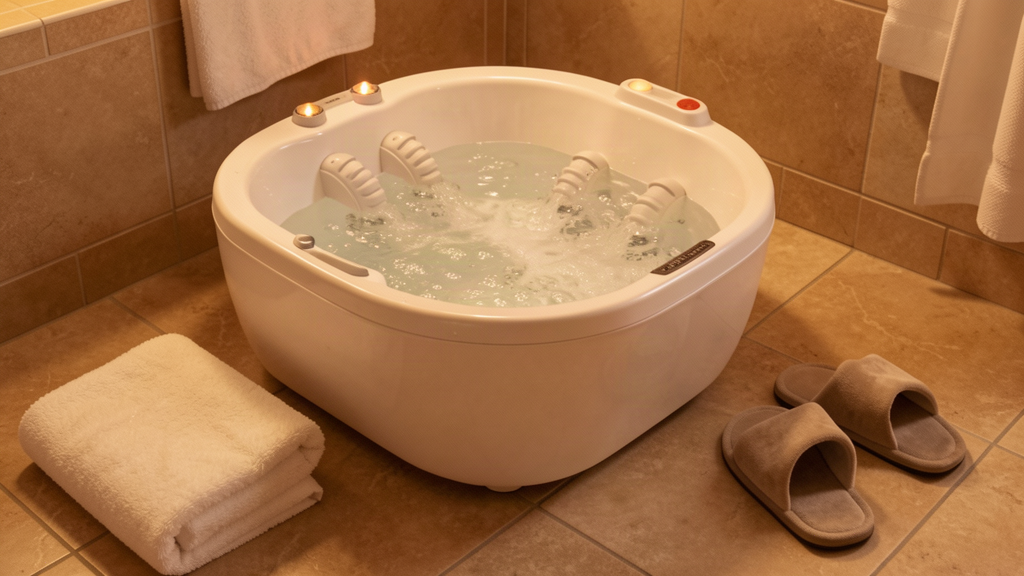
The foot spa massager is the category's compromiser: a basin of warm, bubbling water with massage machinery built in — rollers on the floor, nodes on the walls, jets on the sides. The pitch is the complete at-home spa session: soak, warmth, and massage in one plug-in appliance. The question this guide answers honestly: does the combo deliver both halves well, or neither?
The short version: modern spa massagers genuinely execute the water half excellently (heat maintenance, jets, drainage conveniences) and the massage half adequately (rollers and nodes that add pleasant pressure, not kneading-machine depth). Knowing that split going in is the difference between loving the product and reviewing it bitterly.
(As an Amazon Associate we earn from qualifying purchases. We may also earn commissions from brands listed.)
Quick Picks
| Award | Pick | Why | Price |
|---|---|---|---|
| 🏆 Best Overall | Heat-maintaining jet spa (Ivation-class) | Real heater + jets + rollers | $50–80 |
| 💰 Best Budget | Conair-class bubbler | The $30 honest classic | $25–40 |
| 🛋️ Best Mid | HoMedics heat spa | Best availability + heat maintenance | $40–70 |
| 🎣 Best Kneading Half | Skip the combo: spa + kneader | Two specialists beat one compromiser | $80–150 |
What a Spa Massager Actually Is
Deconstructing the category into its two halves:
The water half — the basin, the heater (in better models), the bubble/jet system, the splash guards. This is where the category has genuinely improved: modern units maintain temperature (rather than cooling through a soak), aim jets at the arches, and drain without lifting (drainage spouts, splash-proof handles).
The massage half — textured rollers set into the floor (worked by moving your feet over them — you provide the motion), acupressure nodes in the basin, vibration in some models. This is pleasant-waterpark pressure, not the deep kneading of a shiatsu machine — the mechanism ceiling of anything submerged in water is limited by hygiene and machinery-in-water engineering.
The honest frame: a spa massager is a great soak with massage garnish, not a massage machine that happens to be wet. Buyers calibrated to that almost universally enjoy the product (the massager-vs-spa decision guide covers the full fork).
The Picks
1. Heat-Maintaining Jet Spas — Best Overall
The top of the category: a genuine heating element holds soak temperature for the session's duration, power jets churn the water against feet and arches, and floor rollers give the soles something to work on. The Ivation-class units define this tier (the three-way comparison).
Owner pattern: heat maintenance is the most-praised feature in the tier's reviews (it's what separates a spa session from a quickly-cooling bucket); the recurring complaints are the eternal spa logistics — filling, emptying, drying (the cleaning ritual).
Best for: the weekly soak ritual, winter evenings, people whose feet want water-and-warmth as the main event.
2. Conair-Class Bubblers — The Budget Classic
The $30-tier machines: bubbles, maintained-warmth (check per model), vibration, and a noduled floor — the no-frills version of the experience (our Conair review).
The honest read: for occasional soakers, this tier does 80% of the job at 40% of the price. The upgrades you give up: real heat maintenance over long soaks and jet power.
3. HoMedics Heat Spas — The Available Middle
The department-store middle tier: better heat systems than the budget tier, gentler jets than the top, plus the brand's availability-and-returns advantage (the full lineup review).
4. The Skip-the-Combo Strategy — Two Specialists
The honest fourth option: a basic spa ($30) plus a kneading machine ($50–100) delivers the full versions of both experiences — real soaking and real kneading — for the price of one high-end spa massager. This is the pairing logic the whole site converges on (the field guide); the combo format only wins when storage space or single-appliance simplicity outweighs performance.
Comparison Table
| Tier | Heat | Jets/bubbles | Rollers/nodes | Drain convenience | Price |
|---|---|---|---|---|---|
| Ivation-class | Maintained, strong | Power jets | Floor rollers + nodes | Drain spout | $50–80 |
| HoMedics middle | Maintained | Bubble + gentle jets | Noduled floor | Varies | $40–70 |
| Conair budget | Warmth-keeping | Bubbles | Textured floor | Manual lift | $25–40 |
| Spa + kneader pair | Best soak (any spa) | — | Real kneading machine | — | $80–130 |
The Spa Session Protocol (Getting the Most From Any of Them)
- Fill warm, not hot — body-temperature-plus water; the heater maintains, it doesn't rescue cold fills
- 10–20 minutes — the skin-softening and relaxation window before maceration territory (the soak science)
- Work the rollers deliberately — the massage half needs your motion: arches over the rollers, heels on the nodes, a few minutes per zone
- Add salts to compatible models only — check the manual; jets and heaters can dislike Epsom and additives (plain-water machines plus a separate soaking basin is the workaround)
- The finish matters — dry fully especially between toes, moisturize (the routine)
- Clean the machine — rinse, dry, air: the basin is the category's hygiene weak point, and neglected water is how spas get retired early
Who Buys Which (The Honest Sorting)
| You are | Your pick |
|---|---|
| Weekly soaker, relaxation-driven | Heat-maintaining jet spa |
| Occasional, budget-conscious | Conair-class bubbler |
| Gift shopper, unknown recipient | HoMedics middle tier |
| Pain-relief driven | None of these — a kneading machine (+ maybe a cheap spa later) |
| Swelling-driven | None of these — compression is the mechanism |
| Everyone, tiny apartment | Budget spa + compact kneader, stored in the spa's footprint |
The Water-Side Upgrades Worth Paying For
When the combo route is right, three water-side features separate the satisfying machines from the frustrating ones. True heat maintenance — the difference between a session that fades and one that finishes strong (the heat divide). The drain convenience — spout-drainage models end the heavy-basin-lift problem that retires more spas than motor failure ever does. The splash engineering — well-designed rims mean the machine travels couch-ward without incident; poorly-designed ones confine the session to the bathroom. None of these are glamorous; all three decide whether a spa gets used weekly or quarterly.
The Two-Room Compromise
Households split between soak-lovers and massage-lovers converge on the same answer this guide keeps arriving at: the cheap spa in the bathroom (the soak ritual's home), the kneader by the couch (the massage ritual's home), and the combo machine only when the budget must produce one machine for both missions. The combo's honest role: the compromise when two specialists won't fit — storage, budget, or simplicity — rather than the upgrade it's marketed as.
The compromise, done honestly, is still a good machine.
The Closing Note
The compromise, done honestly, is still a good machine — and sometimes the right one.
FAQ
What is a foot spa massager?
A soak-and-massage combo appliance: a heated water basin (bubbles or jets) with built-in massage features — floor rollers you move your feet over, acupressure nodes, sometimes vibration. The water half is the real event; the massage half is pleasant garnish rather than machine-grade kneading.
Are foot spa massagers worth it?
For soak-ritual buyers — relaxation, warmth, skin-softening — yes, especially the heat-maintaining tiers. For pain-relief buyers, no: the massage machinery inside a wet basin can't match a dedicated kneading machine, and the money buys the wrong half of the combo.
Do foot spa massagers actually massage?
They deliver pressure-and-texture while you soak — rollers under the arches, nodes against the soles — which feels pleasant and does mild tissue work. What they don't deliver is powered, deep kneading: the honest description is "a soak that fights back a little."
Can I put Epsom salt in a foot spa massager?
Check the specific model's manual — many jetted and heated spas ask for plain water, since salts and additives can gum jets and sensors. The safe split: plain water in the machine, salt soaks in a simple basin (recipes).
Foot spa or foot massager — which should I buy first?
Pain first → the massager (the tissue-work mechanism). Relaxation/cold feet first → the spa (the warmth-and-stillness mechanism). Both complaints → the two-specialists strategy above beats any single combo (the full comparison).
How do I keep a foot spa clean?
Empty after every use, rinse the basin, wipe the jets and rollers, and let it air-dry fully before storage — standing water is the category's hygiene killer. A weekly descale in hard-water areas keeps heaters happy; the five-minute ritual triples the machine's working life.
Comments