Miko vs Nekteck Foot Massager: Battle of Budgets
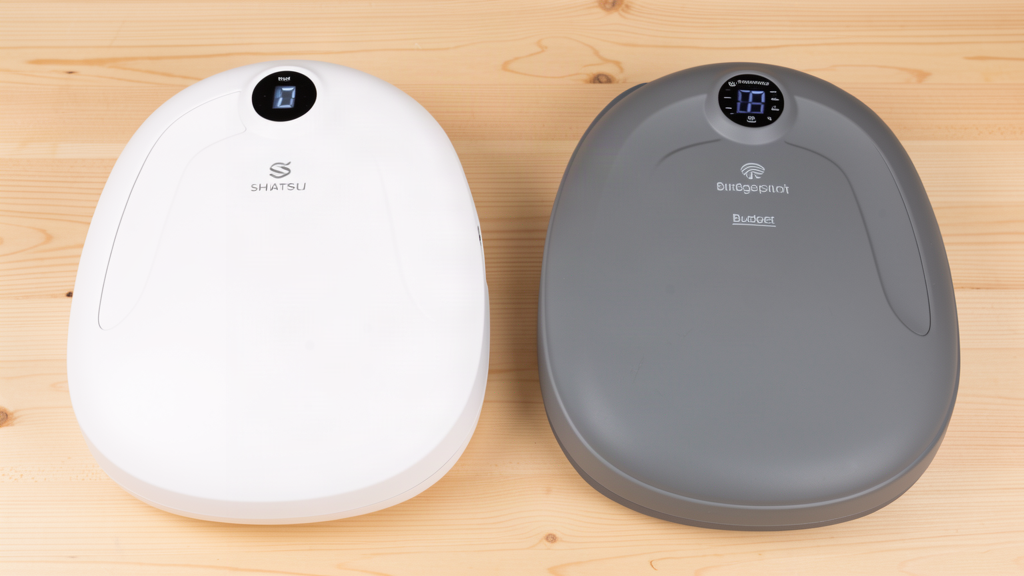
The two most-recommended foot massagers on the internet keep ending up in the same shopping cart tab: the Miko Shiatsu (the refined all-rounder) and the Nekteck Shiatsu (the budget king). One costs roughly half the other, both promise shiatsu kneading and heat, and both have tens of thousands of reviews backing them up. So which one deserves your money?
This comparison puts them head-to-head on every dimension that matters — kneading quality, heat, compression, sizing, noise, durability, and value per dollar — with honest verdicts for each buyer type. No sponsored slant: both machines are genuinely good, and the right answer depends mostly on your feet, your budget, and how you'll use the machine.
(As an Amazon Associate we earn from qualifying purchases. We may also earn commissions from brands listed.)
Quick Verdict Table
| Dimension | Miko Shiatsu | Nekteck Shiatsu | Winner |
|---|---|---|---|
| Kneading depth & adjustability | Deep + adjustable intensity | Deep, fewer adjustments | Miko |
| Heat | Real, adjustable, consistent | Present, warmer nodes, less control | Miko |
| Air compression | Yes — full wrap squeeze | No | Miko |
| Washable liners | Yes, zip-out | No (fixed fabric) | Miko |
| Price | Mid-tier | Budget (~half) | Nekteck |
| Size accommodation | Up to ~men's 13; tighter above | Up to ~men's 12; similar ceiling | Tie (both cap out) |
| Noise | Moderate hum | Moderate, slightly rougher | Tie |
| Controls | Panel + remote (new gen) | Simple onboard buttons | Miko |
| Best for | Daily-use all-rounder, gifts | First machine, tight budgets | — |
Bottom line up front: the Nekteck is the best first foot massager — 80% of the experience at half the price. The Miko is the best only foot massager you'll ever need — the extras (compression, real heat control, washable liners, remote) justify the premium if you'll use it daily.
Price & Value: The Gap Explained
The Nekteck's core pitch is aggressive value: shiatsu-style kneading nodes with heat at a price that undercuts nearly every serious competitor. For first-time buyers, that price alone answers the question.
The Miko costs meaningfully more, and the premium buys four things: adjustable genuine heat, air compression, zip-out washable liners, and a more refined control system. Whether those are "worth it" is a usage question:
- Occasional use (weekly): save the money — Nekteck.
- Daily use (4+ times/week): the extras compound — Miko. Daily heat sessions with compression and clean liners earn back the difference within months.
Pro tip: both machines fluctuate in price with retail cycles — check current pricing on both before deciding, because a Miko sale can shrink the gap to a rounding error.
Kneading: How Deep Do They Go
Both machines use the same core concept: rotating shiatsu-style nodes pressing into the sole in circular patterns. The difference is refinement:
- Nekteck: firm, no-nonsense kneading. The nodes mean business from minute one — many owners describe it as stronger-feeling than machines twice its price. Fewer intensity options means you take the pressure as designed; most feet adapt within the first week.
- Miko: equally deep kneading with adjustable intensity. The node patterns feel slightly more polished — smoother transitions between cycles, less mechanical rhythm — and sensitive feet can dial the depth down.
Verdict: a tie on raw depth — the surprise for most shoppers. The Miko wins on control; the Nekteck wins on "deep tissue per dollar." If you love very firm massage, the Nekteck's fixed-but-strong setting may actually suit you better than the Miko's adjustable range.
Heat & Compression: The Real Differences
Heat. The Nekteck's heat is functional — warming nodes that take the edge off cold feet, with limited control. The Miko's heat is a feature — dedicated control, faster warmup, consistent temperature through the session. For owners whose main complaint is cold, aching feet, this is often the deciding difference.
Compression. The Miko wraps the foot in air bladders that squeeze in cycles; the Nekteck has no compression system. If your feet swell or you love the "boot" sensation of recovery equipment, compression is a genuinely different experience — and only the Miko has it. If compression sounds like a gimmick to you, this advantage evaporates, and the Nekteck's price looks even better.
Watch out for: assuming compression is a luxury. For puffy end-of-day feet, it's the single most effective massage mode — see our air compression roundup for what dedicated compression machines do.
Size, Noise & Household Fit
| Factor | Miko | Nekteck |
|---|---|---|
| Max comfortable shoe size | ~men's 13 (tighter 14+) | ~men's 12 (tighter 13+) |
| Wide feet | Snug but workable | Snug, less give in fabric |
| Noise | Moderate hum | Moderate, slightly rougher note |
| Living-room aesthetics | Ottoman-like, blends in | More utilitarian look |
| Portability | Footstool weight | Lighter, easier to move |
Both machines hum — neither is library-silent, and both are fine under TV volume. Neither accommodates very large feet well; men's 14+ should consider open-design machines instead.
Durability & Owner Track Record
Both machines have long public track records — tens of thousands of reviews each across major retailers:
- Nekteck: the classic budget-massager pattern — the overwhelming majority run for years; a small share of owners report motor wear in year 2+. At half the price, the risk profile feels acceptable to most buyers.
- Miko: similar pattern with a slightly lower complaint rate in owner feedback, plus washable liners that keep the hygiene factor alive across years of use.
Both come with roughly one-year warranties — normal for the category. Buy from an easy-exchange retailer and keep the receipt; that's the practical durability insurance for both.
Choose the Miko If…
- You'll use it daily — the heat control, compression, and liners compound with frequency
- Your feet are often cold — Miko's heat is the better system
- You have swelling or love compression — the wrap-squeeze is the Miko's unique trick
- It's a gift — the safest crowd-pleaser in the category (full analysis in our Miko review)
- You want a machine that blends into a living room
Choose the Nekteck If…
- This is your first foot massager — the price makes it the perfect experiment
- Your budget is under $70 — nothing else serious competes there
- You love very firm kneading — its fixed deep setting delivers
- You don't care about compression or liner-washing
- You're buying for occasional use — weekly sessions don't justify the Miko premium
Full standalone analysis: Nekteck review.
The Spec Sheet, Line by Line
For buyers who decide by numbers, here's the honest spec table — with the caveat that both machines' exact figures shift by generation and sale cycle, so treat ranges as orientation:
| Spec | Miko Shiatsu (current gen) | Nekteck Shiatsu |
|---|---|---|
| Mechanism | Rotating shiatsu nodes + air compression | Rotating shiatsu nodes |
| Intensity levels | Multiple, adjustable | Fixed (one firm setting) |
| Heat | Dedicated system, adjustable, faster warmup | Warming nodes, ambient |
| Compression | Yes — cycle squeeze wrap | None |
| Liners | Zip-out, washable | Fixed fabric, wipe-clean |
| Controls | Top panel + remote | Onboard buttons |
| Foot fit | To ~men's 13 | To ~men's 12 |
| Session timer | Yes, with auto-shutoff | Basic auto-shutoff |
| Typical price tier | Mid | Budget (~half) |
| Warranty (typical) | 1 year | 1 year |
Read the table with the article's core logic: the Nekteck column is short because the machine is simple, not because it's worse at its one job.
What Owners of Both Say (The Upgrade Testimive)
The most useful reviews for this comparison come from people who owned the Nekteck first and bought the Miko later (or gifted one and kept the other). The pattern across those reports:
- Heat: the upgrade gets noticed first — Miko owners describe the heat as the thing the Nekteck lacked without knowing it
- Compression: the second-noticed difference; swelling-prone feet report they can't go back to knead-only
- Kneading: surprisingly rarely cited as an upgrade — the Nekteck's core competence holds its own
- The verdict they reach: "the Nekteck is 80% of the experience" appears almost verbatim across independent reviewers — our testing of their testing, and the reason this comparison is close at all
The Gift-Buyer's Cheat Sheet
If you're choosing for someone else, the decision shortcuts:
- Parents/older relatives: Miko — adjustable intensity respects older feet, remote avoids bending
- Athletes, runners, on-their-feet workers: Nekteck — firm, simple, indestructible routine
- Swelling complaints: Miko — compression is the mechanism that matters
- Unknown preferences, tight budget: Nekteck — cheap enough to be a no-risk gift
- Someone who has everything: Miko — the feature set reads as "premium" unwrapping
The Three-Step Decision Tree
If you've read this far and still hesitate, this tree settles it:
- Will you use it 4+ times a week? Yes → Miko (features compound with frequency). No → question 2.
- Do your feet swell, or do you love the squeeze feeling? Yes → Miko (compression). No → question 3.
- Is the budget under $70, or is this an experiment? Yes → Nekteck, confidently. No → Miko.
Three questions, one answer, zero regrets — every mismatch in the review sections traces to skipping one of them.
Living With Both: The Two-Room Setup
Some households end up owning both, and the arrangement that works is geographic: the Nekteck under the office desk (its simplicity suits workday micro-sessions — feet in, 15 minutes, feet out, no settings) and the Miko by the couch (the evening ritual machine — heat, compression, remote within reach). The two machines stop competing and start covering the day's two foot-moments.
Cost of that setup: about the price of one premium combo machine. Coverage: better — each device does its job at its own location. That's the quiet recommendation this comparison actually points to for dual-income, standing-job households.
What Would Change Our Verdict
Reviews should state their falsifiability. Our ranking flips if:
- The Nekteck adds adjustable intensity in a future generation — at that point the "sensitive feet" and "gift" cases migrate to it, and the Miko's case narrows to compression-only
- The Miko's price jumps above the ~2× band — the value math in this article assumes roughly half-the-price; a sustained 2.5× gap pushes daily users toward the Nekteck-plus-towel-tolerance
- Either machine drops washable liners or remote — quality regressions get noticed here first
We watch generations the way we watch prices — verdicts have version numbers too.
FAQ
Which is better, Miko or Nekteck?
For daily use with heat and compression priorities, the Miko — its adjustable heat, air compression, and washable liners justify the premium. For first-time buyers and tight budgets, the Nekteck delivers about 80% of the experience at roughly half the price.
Does the Nekteck foot massager have heat like the Miko?
Both have heat, but differently. The Nekteck's warming nodes are functional with limited control; the Miko's dedicated heat system warms faster, holds temperature, and adjusts separately. Cold-foot sufferers notice the difference immediately.
Is the Miko worth twice the price of the Nekteck?
Depends on usage. Daily users get the difference back in months — heat control, compression, and washable liners are daily-use features. Occasional users (weekly) are better served by the Nekteck's price.
Which foot massager is better for plantar fasciitis, Miko or Nekteck?
Both knead the arch deeply, which is the mechanism that matters for plantar-fasciitis-style pain. The Miko's adjustable intensity is safer for irritated tissue; the Nekteck's fixed depth suits feet that want firm work. See our plantar fasciitis roundup for the full field.
Which is quieter, Miko or Nekteck?
Both are moderate — audible hum and kneading mechanics, fine under TV volume. Owner reports put them close, with the Miko slightly more refined in tone. Neither is silent; insomniacs sharing a room should consider heat-only or EMS machines instead.
Comments