Nooro Foot Massager Review: Is the Hype Real?
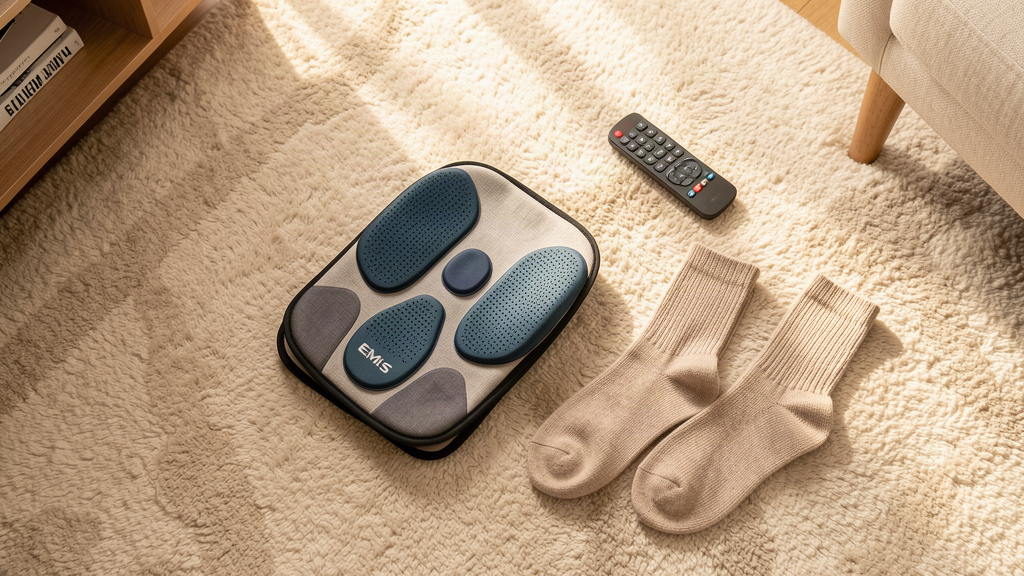
No gadget illustrates the modern wellness cycle better than the Nooro foot massager: a flat, foldable EMS pad that exploded across social feeds with ads promising "clinical-grade foot therapy" for tired, aching, neuropathy-suffering feet — then split the internet into "lifesaver" and "total scam" camps. The sponsored ads promise the world; the furious reviews claim it does nothing. When a product's reputation splits that cleanly, the truth is usually structural: the device does something real, the marketing promises something different, and the gap between them is where the anger lives.
This review sits in that gap. We dug through the technology, the claims, the owner feedback patterns across thousands of reviews, and the copycat problem, to answer the only question that matters: is the Nooro worth $40–80, and for whom — if anyone?
The one-line verdict: it's a real EMS pad that delivers real (mild) electrical stimulation — sold with exaggerated claims to audiences for whom EMS is often the wrong mechanism entirely. For a small group of users it's a pleasant relaxation gadget; for the audiences its ads target, better tools exist for less money.
(As an Amazon Associate we earn from qualifying purchases. We may also earn commissions from brands listed.)
What the Nooro Actually Is
The Nooro is an EMS (electrical muscle stimulation) pad: a flat mat with embedded electrodes that sends small electrical pulses through your soles while you sit with your feet resting on it. Those pulses make nerves fire and small foot muscles twitch-contract — the same physics physiotherapy clinics have used for decades with medical-grade stimulators.
What it is NOT: a massage machine. There are no rollers, no nodes, no air bladders, no mechanical pressure of any kind. The "massage" is entirely the tingling sensation of muscles being electrically puppeteered. That's not a marketing spin — it's the product category's honest description.
The full physics and evidence picture lives in our EMS reality-check guide. The short version: EMS stimulation is real, its home-use benefits are modest and comfort-oriented, and the dramatic claims (circulation therapy, neuropathy treatment, detox nonsense) borrow credibility from clinical settings the pad doesn't replicate.
Verdict box: 3.0/5 — Real technology, inflated claims, thin safety margins for its advertised audience. A fine curiosity purchase for healthy feet at the right price; the wrong tool for the pain and neuropathy sufferers its ads target.
The Claims vs What You Get
| The ad says | The reality |
|---|---|
| "Clinical-grade foot therapy" | Consumer EMS pad; clinical stimulators are stronger, targeted, supervised |
| "Relieves neuropathy symptoms" | No evidence; neuropathy is a doctor-managed condition — and sensory loss is a contraindication for EMS |
| "Improves circulation" | Muscle contractions do pump some blood — a small, temporary effect |
| "Professional massage experience" | Tingling; zero mechanical massage |
| "Fast results for foot pain" | The mechanism doesn't address arch pain at all — kneading/rolling does |
| "Used by athletes" | Athletes' EMS recovery tools are a different product class entirely |
The pattern is consistent: every claim stretches a real-but-small EMS effect into a therapy story. That's the source of the "scam" reviews — not because the pad is fake, but because it isn't what the ad described.
What Real Owners Report
Patterns across thousands of verified reviews (the Nooro and its many identical-looking clones):
The satisfied minority (roughly 30–40%):
- "Weird at first, then genuinely relaxing" — the tingling becomes a pleasant wind-down for some feet
- Useful for people who can't tolerate mechanical pressure (tender, bony feet that hate kneading machines)
- The foldable, portable format earns genuine praise — it travels and stores like nothing else in the category
The disappointed majority themes:
- "It does nothing" — the most common single complaint; buyers expected massage pressure and received only tingling
- Intensity inconsistency — jumpy, uneven pulses are a recurring quality-control theme; some units feel spiky rather than smooth
- Durability — pads dying within months; the electrode surface wearing out; remotes failing
- The ad-to-reality gap — buyers who came in from neuropathy and pain-relief ads were the angriest group, for the structural reason above
The clone problem: the Nooro's design is copied aggressively — dozens of near-identical pads ship from generic factories at half the price. Some clones are fine; many have worse output quality and no warranty path. The branded unit at least has a consistent seller behind it; the clones are a genuine quality lottery.
The Safety Picture (The Part the Ads Skip)
EMS pads carry real contraindications — and the Nooro's marketing targets several of those exact groups:
- Pacemaker/ICD users: absolute no. Electrical interference with implanted cardiac devices is a documented risk. Hard stop.
- People with significant foot numbness (the neuropathy audience!): EMS safety depends on feeling the intensity. Numb feet can't regulate what they can't sense.
- Pregnancy, epilepsy, suspected clots, broken skin: standard EMS contraindications, all applying here.
The full side-effect and contraindication breakdown is in our EMS safety guide — read it before buying any EMS product, not just this one.
Price & Value: What $40–80 Buys
| Alternative | Price | Why it's the better spend |
|---|---|---|
| Manual foot roller | $10–20 | Actual tissue work for arch pain; total pressure control |
| Massage ball set | $10–15 | Targeted knot work, travels smaller than the pad |
| Nekteck-class kneader | $50–70 | Real mechanical massage at the same price |
| Miko-class combo machine | $100–150 | The full feature set if budget allows |
The honest market position: at the Nooro's price, you're choosing between an EMS tingling pad and genuine mechanical massagers — including the budget kneading machines that dominate "best foot massager" lists for good reason. Unless you specifically want the EMS sensation (some do!) or can't tolerate any pressure, the mechanical route delivers more relief per dollar.
For context on where EMS sits among all the mechanisms: our foot massager types explainer maps every category to its use case.
Who Should Buy / Who Should Skip
Buy the Nooro (or a well-reviewed EMS pad) if:
- You specifically want the EMS tingling experience — you've tried it or the sensation appeals
- You can't tolerate mechanical pressure (tender, bony, post-injury feet)
- You want a packable, foldable travel option for occasional use
- You have healthy feet and accurate expectations: a $40 curiosity, not a therapy
Skip it if:
- You have any foot pain condition — arch pain, plantar fasciitis, heel pain — kneading and rolling are the relevant mechanisms
- You have neuropathy or numbness — it's both unhelpful and contraindicated; see our neuropathy guide for the right route
- You're a pacemaker user or pregnant — hard contraindications
- You expected the ads' claims — the product underneath them doesn't match
The Final Word
Is the Nooro a scam? No — it's a real EMS pad that does what EMS pads do. Is it what its ads sell? Also no — it's a mild relaxation novelty wearing a therapy costume. Buy it as the former and it can earn its corner of the closet; buy it as the latter and you'll be writing the next one-star review about the gap between the ad and the box.
FAQ
Does the Nooro foot massager actually work?
The stimulation is real — EMS pulses genuinely make foot muscles contract. But "working" depends on expectations: as a mild tingling relaxation gadget, it does what EMS does; as the pain-relief and neuropathy therapy its ads describe, no — the mechanism doesn't match those promises.
Is the Nooro foot massager good for neuropathy?
No — and this is the dangerous part of its marketing. Neuropathy involves sensation changes that defeat EMS's only safety mechanism (feeling when stimulation is too much), and no home pad treats nerve damage. Neuropathy comfort is a doctor-guided conversation; our neuropathy massager guide covers safer options.
Why does my Nooro pad feel like it does nothing?
Common causes: expectations (tingling isn't massage), dry or calloused soles blocking current, intensity too low, or a low-output unit. If adjusting position and intensity doesn't change the experience, the honest conclusion is that the EMS category isn't for you — a mechanical massager delivers actual pressure work.
Are the cheaper Nooro clones the same product?
Some clone pads come from the same generic factories with minor cosmetic differences; many are lower-output, lower-quality units with no warranty path. If you want the EMS experience, buy either the branded pad or a clone with substantial recent reviews describing smooth, consistent output.
Can I use the Nooro foot massager daily?
Most EMS pads suggest 15–20 minute sessions; many healthy owners use them near-daily without issue. Sensible rhythm starts every-other-day for the first two weeks so skin and muscles can show their response. Anyone with sensation changes, skin issues, or medical conditions should treat daily use as a doctor question first.
What's better, the Nooro or a shiatsu foot massager?
For massage purposes — meaning pain relief, arch work, end-of-day tension — a shiatsu machine, at every price point. The EMS pad's only advantages are portability and zero mechanical pressure, which matter for a small group of tender-footed users.
Comments