Plantar Fibroma: When That Bump Isn't a Spur
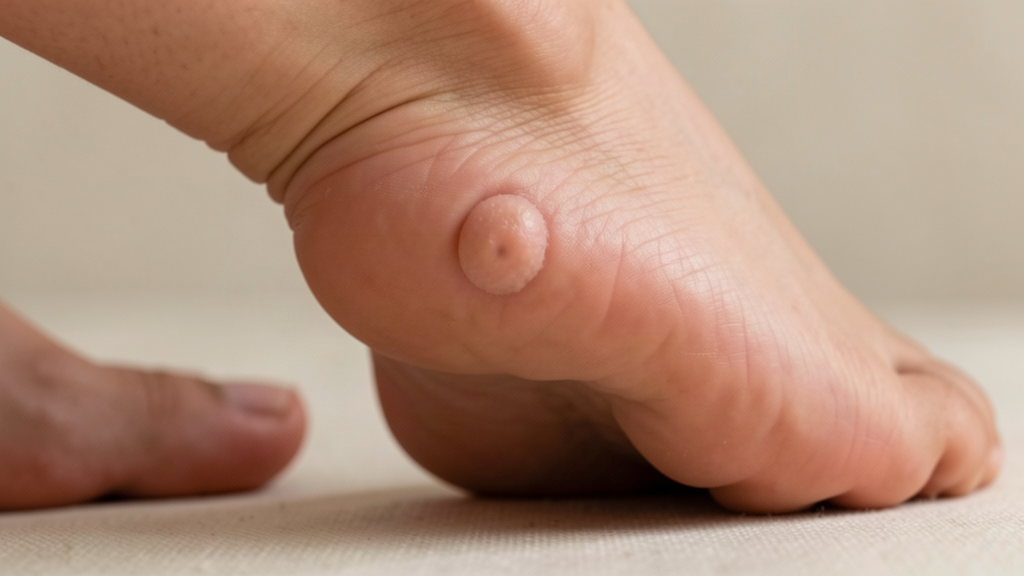
You noticed a lump in your arch — firm, doesn't move much, maybe a little tender when you press it, definitely new. Dr. Google offers two leading suspects: a bone spur or "something worse." The actual most likely answer for a firm mid-arch lump is neither — it's a plantar fibroma, a benign nodule in the fascia itself, and it behaves nothing like a spur.
This guide explains what a plantar fibroma is, why it appears, what actually changes it (and what doesn't), and the signs that separate a harmless fibroma from the lumps that need urgent attention. Plain language, honest options, no fear-mongering — the orientation most people get in a ten-minute appointment, available before you make one.
Important: any new foot lump deserves a professional evaluation — this article helps you understand the landscape, not self-diagnose. It's general information, not medical advice.
(As an Amazon Associate we earn from qualifying purchases. We may also earn commissions from brands listed.)
What a Plantar Fibroma Actually Is
The plantar fascia is the thick band under your arch from heel to toes. A plantar fibroma is a benign (non-cancerous) overgrowth of fibrous tissue within that band — a nodule that the fascia grows out of itself, the way a rope can develop a thick knot within its fibers.
The feel-test profile that distinguishes it:
| Feature | Plantar fibroma (typical) |
|---|---|
| Location | Mid-arch, in the fascia's path (medial/inner side especially) |
| Texture | Firm to hard, deep in the tissue |
| Movement | Attached — moves little with skin shift |
| Skin over it | Normal |
| Pain | None at first; tenderness with pressure or walking as it grows |
| Growth | Slow, over months |
| Number | One usually; some people develop several (plantar fibromatosis) |
The name to know for the multiple-nodule version is plantar fibromatosis (Ledderhose disease — the foot's cousin of the hand's Dupuytren disease). Genetics load that dice.
Fibroma vs Bone Spur vs the Others: The Differentiator Table
The lump-distinguishing cheat sheet (still requiring the doctor's confirmation — imaging or biopsy when in doubt):
| Sign | Plantar fibroma | Bone spur | Plantar wart | Ganglion cyst |
|---|---|---|---|---|
| Where | Within the arch band | At heel bone or joint | Skin surface, often forefoot/heel | Near tendons/joints, ankle or foot |
| Feel | Firm, fixed in the fascia | Hard, part of the bone | Rough, with clot-like dots | Squishy-soft, moves a bit |
| Surface skin | Normal | Normal | Callused, thickened | Normal |
| Pain when squeezed | Deep ache | Sharp bony pain | Sharp "my digger" pain | Usually mild |
| Classic giveaway | Deep in the band, worse barefoot on hard floors | Worse with the first steps, at the heel | Hurts side-to-side squeeze | Translucent look |
The one-line summary: bone hurts at the heel's edge with first steps; a wart lives in the skin and stings when squeezed; a cyst is squishy; a fibroma is a deep knot in the band.
Why It Appeared: Causes and Risk Factors
The honest answer: nobody fully knows. The leading understanding points to:
- Genetics — the strongest predictor; fibromatosis runs in families and alongside Dupuytren's contracture
- Micro-trauma — repetitive strain to the fascia (long standing days, high-impact activity) as a trigger
- Age and sex — more common in middle age; men somewhat more than women
- Trauma history — a remembered injury to the arch sometimes precedes it
- Associations — reported alongside diabetes, epilepsy medication use, and other fibromatoses; none of these are destiny
The useful framing: the nodule is the fascia's version of scar-tissue overdrive in a genetically predisposed rope — the rope's knot grows from within, not from something you "caught."
The Symptom Timeline (What It Does)
- Phase 1 — the discovery: a painless pea-sized lump, found by accident. No treatment needed beyond confirmation.
- Phase 2 — the pressure phase: as it grows, standing on hard floors presses it against the ground — a deep ache with barefoot walking, relief in cushioned shoes.
- Phase 3 — the functional phase: larger nodules change how you walk to offload the bump — the gait adaptation is often what brings people in, not the lump itself.
- The slow truth: growth is usually gradual and may plateau for years. Fast growth is a see-the-doctor- promptly flag, not a panic.
What Actually Helps: The Treatment Landscape
The treatment reality for fibromas is humbling and worth stating up front: no treatment reliably removes them without surgery, and surgery itself has a meaningful recurrence rate. The hierarchy from least to most invasive:
| Option | What it is | Honest read |
|---|---|---|
| Observation + footwear | Confirm it's a fibroma, pad around it | The correct first step for most — many never need more |
| Offloading orthotics | Inserts with a depression cut around the nodule | The workhorse — redirects pressure off the lump (inserts guide) |
| Corticosteroid injection | Injection to shrink the nodule | Can soften/shrink some; recurrence common; doctor's call |
| Collagenase / other injections | Enzyme-lysis approaches | Interesting, off-label, results vary |
| Radiotherapy (early, superficial) | Used in some European fibromatosis protocols | Niche, not standard US first-line |
| Surgery (local excision / fasciectomy) | Removal of nodule or wider fascia | For refractory, painful cases; recurrence and wound complications are real possibilities |
Watch out for: the internet's "natural fibroma dissolvers" — the castor oil, the apple cider vinegar, the "massaging it away" routines. Fibrous nodules don't respond to topical anything; the claims sell hope, not change. Gentle massage remains fine for comfort — just don't expect the lump to melt (massage for comfort, not a fix).
Living Well With a Fibroma: The Practical Playbook
- Get it confirmed — a doctor's exam ± ultrasound settles fibroma-vs-spur-vs-other in one visit; peace of mind is cheap
- Pad around, not on — orthotics or OTC inserts with the nodule's pressure point relieved (a cobbler or pedorthist can modify an insert in minutes)
- Cushioned footwear — the barefoot-on-hard-floors ache is a shoe problem; cushioned soles and supportive shoes turn the volume down (shoe logic)
- Keep the fascia healthy overall — stretching, weight management, sensible standing loads: the same load-management that supports plantar fasciitis care keeps the whole band happier
- Track it simply — a monthly photo and measure with a fingertip log; changes you can show beat changes you try to remember
When a Foot Lump Is Urgent (The Red Flags)
Skip the waiting room question entirely and seek prompt evaluation if:
- The lump is growing visibly week over week
- It's painful and hot with redness (infection territory)
- You have numness/tingling radiating from it (nerve involvement — a different problem family)
- There's a history of cancer anywhere (standard caution, rare)
- It appeared after a puncture or injury
- It's soft, expanding, or pulsing (vascular territory)
Fibromas are slow, firm, and boring — drama in a foot lump is not a fibroma signature.
FAQ
Is a plantar fibroma dangerous?
No — it's a benign overgrowth of the fascia's own fibrous tissue, not a tumor in the dangerous sense. The problems it causes are mechanical (pressure, gait change), not disease spread. Confirmation by a doctor is still the right first step for any new lump.
Can a plantar fibroma go away on its own?
Rarely. Most stay stable or grow slowly over months to years, and spontaneous shrinkage is uncommon. The good news: many never need treatment beyond pressure offloading and footwear — "still there, pain-free" is a completely acceptable outcome.
What happens if a plantar fibroma is left untreated?
Usually nothing dramatic — continued slow growth at worst, with the main risks being pressure pain and gait adaptation over time. The exceptions that change the plan: rapid growth, significant pain, or nerve symptoms — those push toward active treatment or surgical evaluation.
Can massage get rid of a plantar fibroma?
Massage won't dissolve the nodule — fibrous tissue doesn't melt under hands, oil, or devices. Gentle massage can keep the surrounding tissue comfortable and supple, but expecting the lump to shrink is setting up disappointment.
Is plantar fibroma surgery worth it?
For the painful, refractory minority — it's the option that can genuinely remove the lump, with the honest tradeoffs: recurrence is possible, wound healing on the sole is slow business, and recovery is measured in weeks. Most fibromas never reach that decision point.
How is a plantar fibroma diagnosed?
A doctor's exam (location, feel, behavior) plus ultrasound when confirmation matters — the nodule's appearance on imaging is characteristic. X-rays rule out bone; biopsy is reserved for atypical cases. It's typically a one-visit answer.
Comments